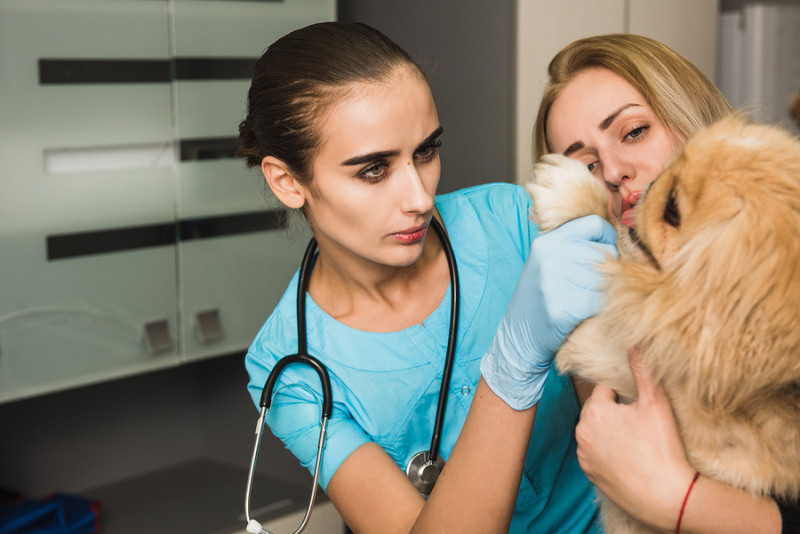
Animals function similarly to people. They suffer from diseases like us, their joints degenerate over the years and their mobility is reduced while experiencing pain. Today we are going to know how to detect osteoarthritis in dogs.

Cómo detectar la artrosis en los perros

What is osteoarthritis and when it appears

A joint is the union that exists between the bones and that allows us to move the way we do. The ends of those are covered by a protective cartilage, responsible for giving softness to the movements and protecting from impacts.

When this cartilage begins to lose or weaken in its structure, we say that osteoarthritis appears. This is, therefore, a chronic and degenerative disease that affects the joints, and that in some cases can be congenital. Consequently, pain appears and mobility is progressively lost. These are some keys to detect osteoarthritis in dogs.

As happens to people suffering from this disease, changes in the weather generate discomfort. Thus, cold, humidity or very high temperatures aggravate the symptomatology.

In elderly dogs it is common for it to appear. Unlike in young dogs, the cartilage has lost nutrients and decreases thickness and flexibility. However, trauma or blows to the joints can also favor their appearance. The difference in detecting osteoarthritis will be that in one case it will be general while in the second it will be localized.

How we can detect osteoarthritis in our dog

Whether young or old, we should always pay attention to the mobility of our dog. Any change that is perceived in time will be easier to correct or deal with than another that is allowed to advance. Detecting osteoarthritis from its early stages will help us prolong the mobility of the animal.

Problems with stairs

If your dog has begun to refuse to go up or down stairs, you may have just spotted osteoarthritis. This type of movement involves an impulse or a load of one’s own weight that, in the case of suffering from weakness in the joints, can be an important effort.

Slouching

Another way to detect osteoarthritis is by slouching. The reduction in movements makes it expensive to stretch completely. In this way, the limbs or spine may begin to curve excessively.

Lack of energy

If it is time for the walk or you propose to your dog to play and no longer responds with the illusion of before, you have before you another symptom to detect osteoarthritis. You will most likely have a hard time getting up or making sudden movements.

Lameness

Intermittent lameness also helps us detect osteoarthritis. A limp that comes and goes may be due to a joint that begins to lose strength. If you also complain when we touch it or prevent us from doing so, you are likely to feel pain.

If you think you have been able to detect osteoarthritis in your dog, go to your veterinarian as soon as possible for a radiological study. Although it is a degenerative disease, there are many treatments to prolong its mobility.

Dogs that undergo an operation have to go through a period of rest and care to return to their normal lives. Therefore, the
recovery of dogs
requires special care that in many cases depends on the type of operation they have undergone.

Regardless of this, a series of guidelines to follow will have to be taken into account when the animal leaves the veterinarian and arrives home. This way you will be more comfortable and your recovery will be more bearable

Rodillera para perro

What to do to help dogs recover after an operation

While the dog is still in the veterinary clinic, it is advisable to accommodate its rest area according to its condition. It is convenient to keep it especially clean and ventilated. And as quiet as possible so that the animal can be relaxed and smooth.

During the first days, and depending on the severity of the operation, it is convenient that you do not do much exercise. You just have to go out to relieve yourself. And in these cases, you don’t have to let him walk away.

You also have to be very careful of your wound, and prevent it from licking it. Although in many cases, a dog licks a wound is good, if it has stitches it is not advisable. He could remove them ahead of time, and the wound would open. So, if the animal begins to lick the wound of the operation, everything possible must be done to avoid it.

The simplest way is to place a necklace around his head, shaped like an open bell. This collar, made of transparent plastic, prevents him from doing so, and is annoying for the dog. However, it is the best way to avoid problems with wounds.

You also have to remember to give him the medication that has been prescribed. And make him drink plenty of fluids. Above all, in the hours after the operation, so that it expels the anesthesia.

Wound cleaning

In addition to certain medication, the veterinarian will recommend to the owner of the operated dogs how to take care of the wound. Above all, how you have to clean it to avoid infections.

In general, an antiseptic solution should be used for this purpose two or three times a day. And carefully monitor the wound so that there are no problems. Of course, before any alteration that presents, you have to go to the veterinarian to rule out problems.

External aids in limb operations

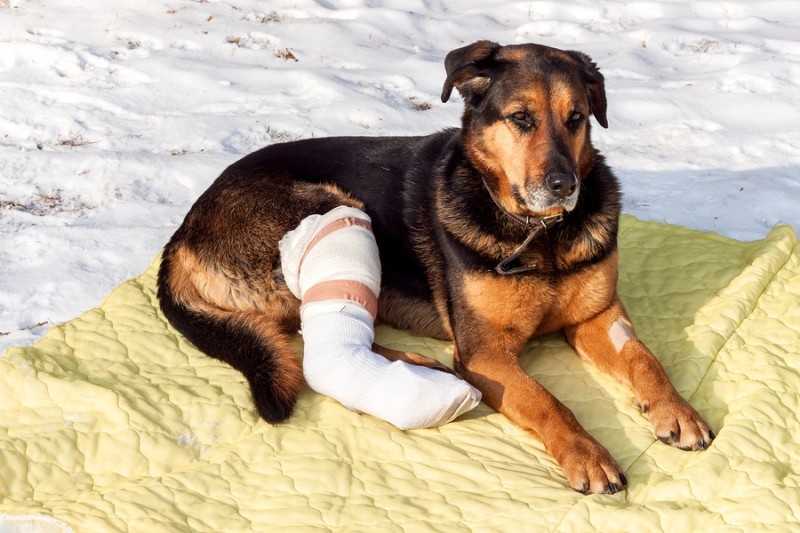
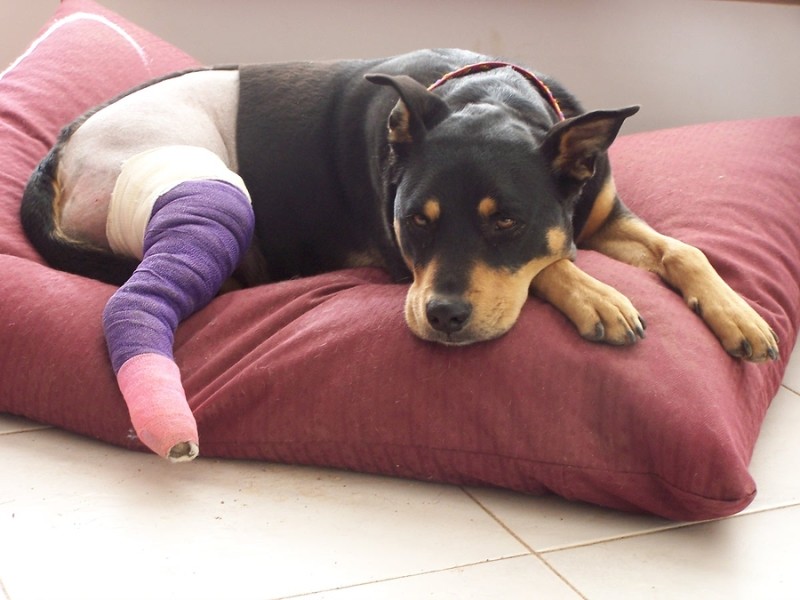
Operations on the limbs are some of the most annoying for dogs. Not a few, in addition, take a long time to heal. And some even require specific rehabilitation so that the animal can regain mobility in it. As long as, of course, the wound is already completely closed and healed.

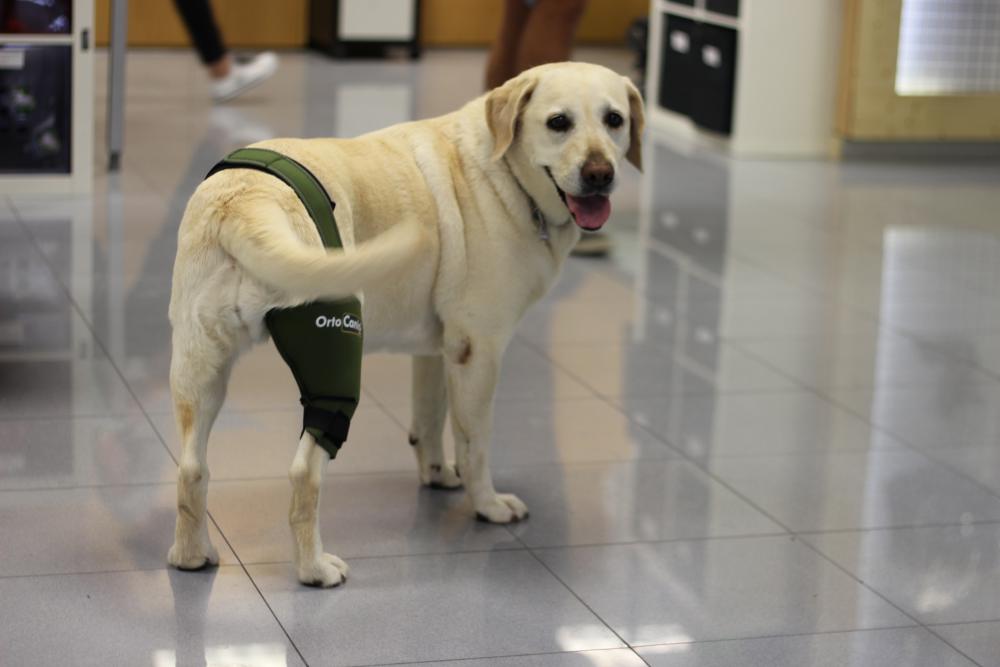
In these cases, the dog may need some kind of support or protector not only to avoid harming himself. Also to be able to have more firmness in the use of the affected leg. For example, in the case of bone fractures, it may be advisableto put a splint on it. Or simply, a protector or a support, which can be knee, carpal, tarsus, hip, etc. With them, the dog will feel safer when moving.

De igual modo que les sucede a los humanos, los perros también pueden experimentar dolor y malestar por múltiples motivos. Puesto que ellos no suelen quejarse, debemos saber cómo identificar el dolor para poder llevarles al veterinario.

Cómo identificar el dolor en los perros

Cómo podemos identificar el dolor

Muchos perros no exteriorizan su malestar. Por tanto, hay que prestar atención a su comportamiento para darnos cuenta de si les pasa algo. Si nos fijamos en los detalles, podremos identificar el dolor que estén experimentando y tomar medidas. A continuación vamos a conocer varias señales que pueden esconder un problema.

Se esconden

Cuando los perros sienten miedo tienden a esconderse. Esto lo hacen para refugiarse en algún sitio tranquilo en el que se sientan a salvo. También, cuando se encuentran mal, utilizan este recurso, como medio para descansar y soportar mejor la enfermedad o recuperarse de lesiones. Aunque también se debe a un instinto que les hace protegerse de los depredadores cuando se encuentran débiles.

Así, si observamos que nuestro perro se está escondiendo bajo la cama o los sofás, es una señal para identificar el dolor. Si no hay ruidos externos atípicos ni visitas en casa, puede ser un buen momento para llevarle al veterinario.

Pérdida del apetito

Dicen que cuando el cuerpo está enfermo solicita menos comida para centrarse en combatir el virus que lo ataca. Los perros también muestran este comportamiento, por lo que es una ayuda para identificar el dolor o malestar.

Cuando no se superan las 24 horas sin comer no se considera grave. Sin embargo, es conveniente que el perro se mantenga al menos hidratado. Si esta actitud de inapetencia persiste y no logramos identificar el dolor, debemos acudir al veterinario.

Cojeras o dificultad para andar

La señal más evidente para identificar el dolor en los perros es la cojera. Cuando algo les duele o molesta pisan con dificultad o levantan una de las patas. No obstante, puesto que su resistencia es bastante fuerte, hay que observarles con regularidad. De lo contrario, una cojera leve podría pasar desapercibida y no podríamos identificar el dolor.

Una cojera puede deberse a que han pisado algún objeto pequeño y se les ha quedado entre los dedos, se han cortado o se han hecho una lesión más grave como un esguince o una fractura. En estos casos será el veterinario quien haga el diagnóstico.

Aumento del sueño

Otra señal para identificar el dolor es el aumento de las horas de descanso. Hay ciertas épocas, como los cambios estacionales, en los que podemos necesitar dormir más. Pero cuando esta actitud persiste y afecta a su interés por el juego e incluso los paseos, hay que preocuparse.

Podemos probar a darles otros estímulos y así identificar el dolor en caso de que exista. Si continúa sin responder lo más recomendable es llevarles al veterinario para que determinen allí qué les sucede.

Gemidos y ladridos

Otra de las señales más evidentes para identificar el dolor en los perros son sus propias quejas. Aunque no es lo más frecuente, algunos pueden lloriquear o gemir para llamar nuestra atención. Por otra parte, pueden ayudarnos a localizar la molestia, ya que al palpar la zona dolorida probablemente se quejarán.

Para poder identificar el dolor en los perros tenemos que volvernos observadores. De esta manera, ninguna molestia pasará desapercibida y podremos tratarles con rapidez. Recuerda que cuanto antes localicemos un problema, mayores serán las probabilidades de recuperarse correctamente.

Ayudas para perros con artrosis

Cuando hablamos de fracturas sabemos que hacen referencia a un hueso roto. Sin embargo, no todas las fracturas de hueso en los perros son iguales ni resultan tan evidentes como pensamos. Aprende a detectarlas y a darles el tratamiento adecuado para acelerar la recuperación.

Cuáles son los tipos de fracturas de hueso en los perros

Las fracturas de hueso en los perros se agrupan en diferentes tipos en base a sus características. De este modo, podemos distinguir entre las cerradas, las compuestas, la fractura epifisiaria y las que son en tallo verde.

Cuando se trata de una fractura cerrada, la piel se encuentra en estado normal. Es decir, no, aunque hay una rotura, no hay señales en la superficie de la zona afectada. Sin embargo, las fracturas de hueso en los perros compuestas sí que presentan una rotura también de la piel, a través de la cual aquel sale hacia el exterior.

Estas fracturas de hueso en los perros presentan un riesgo muy alto. Al sobresalir, está en contacto con gérmenes del exterior, lo que pude dar lugar a una infección. Puesto que nos permiten detectarlas fácilmente, debemos acudir al veterinario de inmediato.

En cuanto a los otros dos tipos de fracturas de hueso en los perros, las de tallo verde con pequeñas fisuras. Esto es, el hueso no ha llegado a romperse. Y las epifisarias son las que se producen en zonas de hueso blanda en perros que aún están creciendo. Se les llama placas de crecimiento y son las partes que van aumentando de tamaño.

Salvo las de tallo verde que no llegan a ser fracturas, las demás pueden ser a su vez simples o compuestas. En las primeras el hueso se rompe en un par de pedazos únicamente, mientras que en las compuestas lo hace en más.

Tratamiento de las fracturas de hueso en los perros

Lo más importante para evitar que el daño vaya a más es detectar las fracturas de hueso en los perros a tiempo. De lo contrario, podrá afectarle a la movilidad o al funcionamiento de su cuerpo. A la hora de tratarla, varios factores influirán, como la edad, el tamaño del animal, la zona de la fractura y el tipo de la misma.

Por norma general se realizará una radiografía de la parte afectada y se valorará así la posibilidad de realizar cirugía. En cualquier caso, esta zona deberá ser inmovilizada una vez que el hueso esté alineado. Así permitiremos que vuelva a sellarse y a funcionar correctamente.

Si se trata de un hueso importante, y especialmente en las extremidades, en muchos casos habrá que seguir una rehabilitación cuando haya soldado. Gracias a ella el animal irá recuperando la movilidad y la fuerza. Al haber estado inmovilizado, la musculatura suele debilitarse, por lo que hay que reactivarla de manera paulatina.

En Ortocanis tenemos disponibles férulas ortopédicas de diferentes tipos que nos ayudarán a tratar las fracturas de hueso en los perros. Además, puedes encontrar colchonetas para la rehabilitación y varias opciones para la recuperación de la fuerza. ¡Recuerda acompañarlas todas de mucho amor y paciencia!

Nowadays, most sea lovers have dogs and many times we do not know what to do with them during our visits to the beach. Our four-legged friends are always happy when we get home and are excited to share moments with us so why couldn’t we introduce them to paddle surfing?
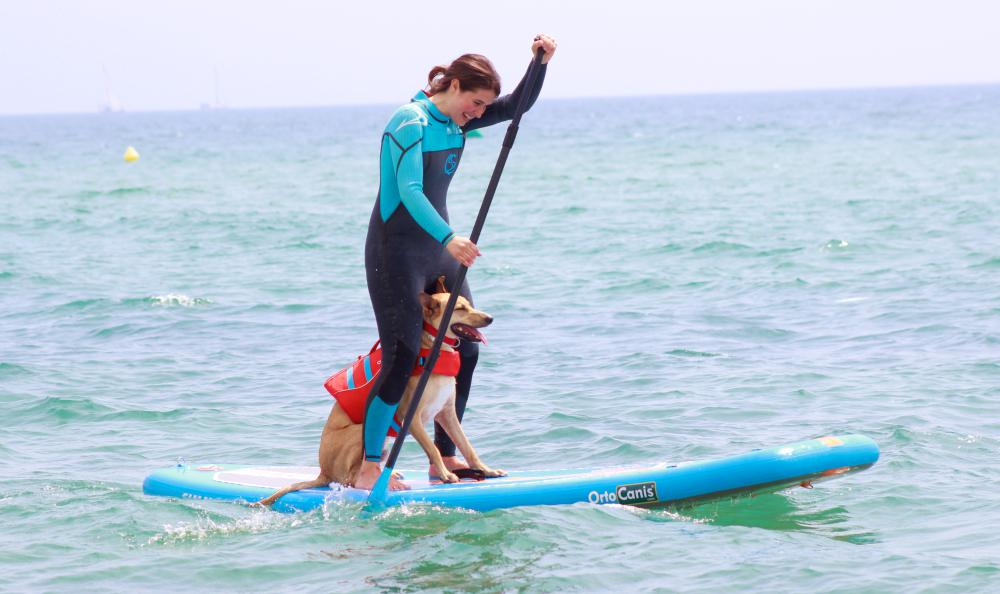
paddle surf perro

The mere fact of sharing an activity with them not only tires them and motivates them to work but also creates a bond with us in which we can gain a lot of trust with our dog.

Our preparation

Before we begin, we must keep in mind what our objective is. In our case it is to get us to enjoy a walk through calm waters with our dog. This is going to take an effort and not every day we will leave our training as happy.

Some dogs love water and have no fear of the waves, others their total trust with the owner leads them to do unthinkable things like jump off a wall and wait for the owner to catch them when they fall. Now, we will put ourselves in the most critical situation, train a dog that does not like to swim and even less face unpredictable situations, as is the case with Nik.

So starting from the previous premises we must keep in mind that for our dog this activity must be fun and therefore can never lead to a punishment, there must always be a prize. This will motivate them and strengthen the desire to be able to share a good paddle surf ride with their owner.

It is important to start working on two aspects: the first is the motivation to interact with water, we must get familiar with this medium, for example, in lakes or rivers where there are no waves. There we can run next to him along the shore or throw a doll at him to go find him. And the second, start working with the paddle board on the ground.

Starting on land
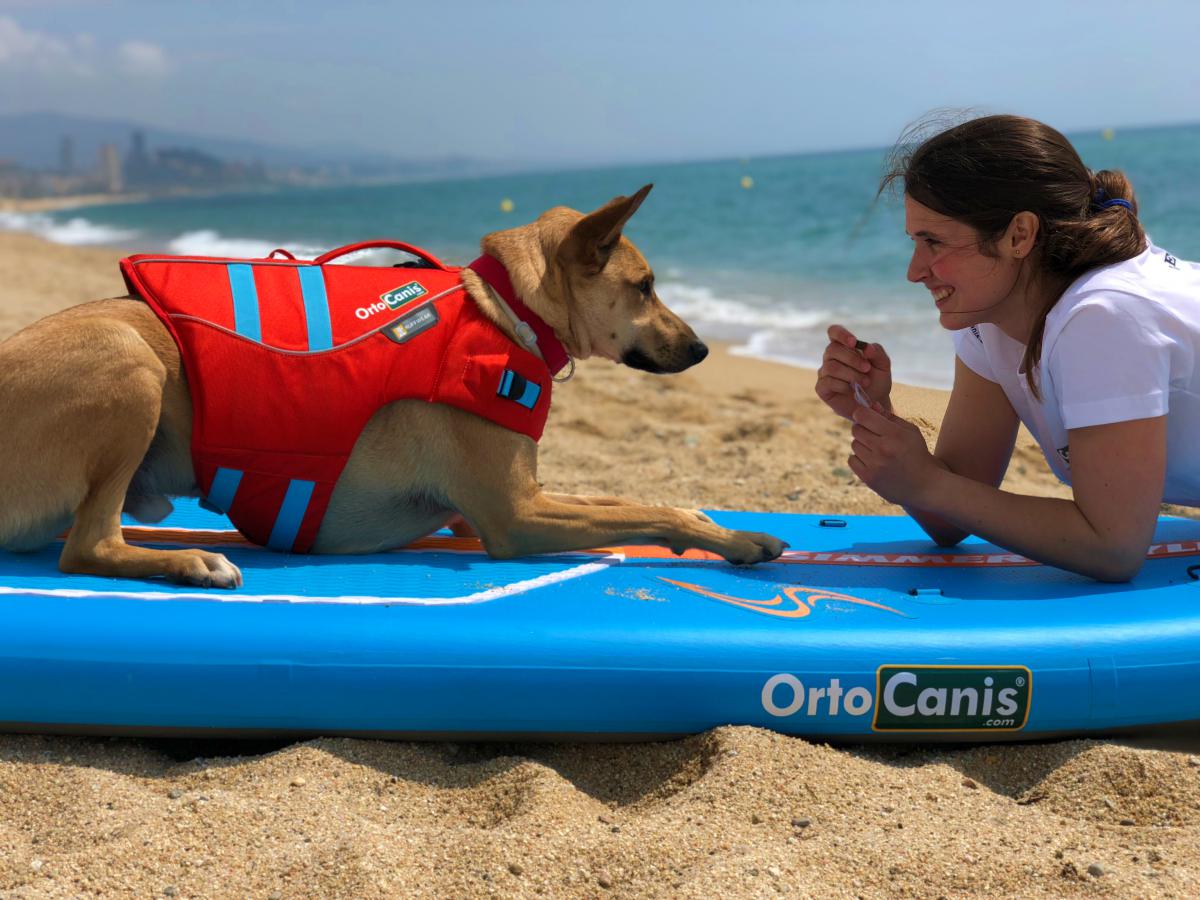
Paddle Surf con perrosThe idea of starting working with the board on the ground is so that our dog gradually feels safe in it and gains confidence, in such a way that we will use positive reinforcement. The more positive experiences our dog has with the board on land, the safer he will feel when this activity becomes a greater challenge for him.

First we can leave the board on the ground and let the dog experiment and explore. After a while, we can put some candy or toy on top to motivate you to get even closer and go up. Just at the moment he climbs above the table we must reward him in such a way that he will understand that we are happy and he gets a prize when he performs this action.

When we observe that our dog already climbs confidently we can introduce certain orders, either to indicate that he goes up or down as well as to sit or lie on top of the board, since this is what we will need once we are in the water. Little by little we must begin to get behind him while he is sitting or lying down and we can demand that he be for a longer period of time in that position.

Our last step before going to the water is to familiarize you with a dog lifeguard armour out of the water. The dog must associate that the board and the armilla go together so we will continue working the previous orders with the armilla on.

At this point many of you will wonder why use a armilla for the dog. First of all, we must keep in mind that if we want to go out into the water we can fall and we must be able to ensure the life of our friend, in such a way that it will help us whether it is hit or if we want to climb it back on the board. Many of the armillas they sell have a handle to be able to take the dog, so we can climb it easily.

Let’s go to the water

First of all it is important that we master paddle surfing before riding our dog. When we have this consolidated, it is time to look for a lake or a river with calm water to take you in your first days.

Before getting directly in the water it is important that we work a little on the routine created on the ground so that the dog gets used to the change and the new environment. Later we can make our first steps in the water:

Step 1: Get the dog to climb on top: For this we will place the board well taken near the shore and we will keep it as still as possible, we will give the order to climb on top of it and we will reward at the time of riding since it will swing. We will continue to reward as the dog is on top of the board (it does not need to be with all four legs) and little by little we will ask him to be all on the board. If you are calm we can move the board slowly. Finally, we will give the order to come down from it and at that time we will reward you with great enthusiasm since you have achieved a great achievement.

Step 2: Get the two of us on top of the table: To get it we will sit in the center of the table, we will give the order to go up and then the order to sit down. Later we can paddle as if we were taking a kayak or if we are two people, one can climb in the back and walk while we continue working on the safety of the dog.

If we both feel safe, with very soft and slow movements we can get on our knees and continue to surround our dog that is sitting. Our last step will be to stand on top of the board with the dog sitting between our legs. If we are alone we must continue very gently but if we have help we can get up and invite the dog to climb while our partner holds the board.

At all times, patience and calm. Our dog will indicate when he is ready for the next step and in this way we can face challenges with him. If we enjoy and they enjoy each time we can introduce you to new environments and little by little we will share more activities at sea with our friends, such as surfing a wave.

Aida Macià – Sailboards Girona – OrtocanisBaner silla 728x90

Dogs can suffer, in many cases, from bone and joint diseases that humans also suffer. For example,
herniated disc
. This ailment, which is degenerative, is characterized by the exit of the intervertebral discs of the spine from its place. Also because of its bulge. The exit of the discs from its canal, which also causes a compression in the spinal cord of the animal, is what generates the herniated disc in dogs.

This type of hernia, which is complicated to diagnose, can cause not only pain to dogs. Also difficulty walking. Even if it is very serious, it can cause paralysis of the legs of the animal. Usually from the rear. To prevent it from reaching those extremes, it is best to diagnose the animal correctly and as soon as possible.

The bad thing is that the symptoms are usually difficult to identify. Sometimes, in addition to an X-ray, the dog will have to be tested further to ensure the diagnosis. In any case, when in doubt, it is best to consult with a veterinarian to avoid pain and mobility problems to the dog.

Principales síntomas de la hernia de disco en perros

First symptoms of herniated disc in dogs

The main symptom of herniated disc in dogs that occurs through the protrusion or bulging of the discs will be a lump. It may vary in size, but it will be obvious. In addition, the dog will suffer pain in the area. And touching the lump, which will be the hernia, can make you, just like humans, “see the stars.”

Otherwise, when the disc moves into the body, we speak of extrusion. The hernia will not be as evident to the eye. Of course, we will see that the animal has pains. And that only in the first phase of the ailment, when the animal has a grade I herniated disc. When it is more advanced, the herniated disc has other symptoms.

Herniated disc in grade II or III dogs

When the hernia becomes more severe (grade II), compression of the marrow begins to occur. The dog will then begin to have mobility problems. And the bone marrow will be about to be affected. This will happen in grade III herniated disc.

At that time there begins to be neurological damage to the marrow. The hernia, whether it occurs towards the inside of the body or if it comes out in a lump, will compress the marrow a lot. Then the dog will have a lack of strength in the hind limbs quite evident. This, which usually affects the two back legs of the animal, is called paresis.

Grade IV or V disc herniation in dogs

When the herniated disc in dogs is already very serious, paresis causes great difficulties for the dog to move its hind legs. At some points they may even be completely paralyzed. In this case, the animal will have to start using a specific wheelchair for dogs to be able to move.

At this point, that of the grade IV herniated disc is not the only thing that can happen to the dog. The hernia may also affect your sphincters. Then you will have urine retention problems.

Already if the hernia is grade V, the most severe case, the paralysis of the hind legs will be total. In addition, urinary incontinence will be inevitable. Apart from this, you will have a complete lack of sensitivity in the paws.

Baner silla 728x90

As they get older, dogs also have their ailments. Among them, arthritis, a disease suffered by about one in five dogs. Arthritis affects the joints and causes affected dogs to swell one or more legs. Arthritis in dogs will cause them to not only walk badly. It will also cause them a lot of pain.

This disease is degenerative and in many cases has no cure, but at least it can be treated so that it progresses as slowly as possible. Especially if it is diagnosed in its early stages. Then measures can be taken to alleviate its effects, and to improve the quality of life of the animal. But to achieve this, it is essential to detect its symptoms as soon as possible.

artritis en perros

Main symptoms of arthritis in dogs

Among the main symptoms of arthritis in dogs is the difficulty that those affected have to get up and lie down. They may also have more or less stiffness in the affected legs. Because they may have one or more affected.

In addition, they are reluctant to climb stairs, nor do they want to jump. They may also stop performing certain movements that they used to do habitually. In parallel, noises can be heard when bending the legs. And inflammation may be visible, making it easier to detect the disease.

It is normal for the dog to also have pains, which will cause him to complain. In any of these cases, it is advisable to consult with the veterinarian so that he can correctly diagnose the ailment.

It should also be borne in mind that arthritis in dogs does not only occur in animals of a certain age. It can also affect younger dogs. In these cases, arthritis is usually due to an injury, and also to a strong blow.

Treatment of arthritis in dogs

As we have mentioned, following certain guidelines and treatments, arthritis in dogs can be relieved and slowed down. Also largely avoid the pains it causes.

Generally, the first thing the veterinarian will do after the diagnosis of arthritis is to put a drug-based treatment. Among them there will be analgesics for pain, and also anti-inflammatories. Of course, the treatment will depend on each animal and also on the advanced nature of the disease.

It is also usually recommended that the dog take a food supplement, focused on the regeneration of cartilage that has suffered damage. Among them, those with Omega 3. In many cases they can relieve inflammation and cause the condition of the affected legs to improve. And in later cases, and if the arthritis is usually very advanced, the veterinarian may recommend an operation.

In addition to the treatments proposed by the veterinarian, certain measures can also be taken to facilitate the daily life of the dog. For example, you have to monitor your diet to prevent it from getting fat and overloading your joints. You should also try to get him to do some gentle exercise on a daily basis. For example, walking for 15 or 30 minutes every day. Swimming will also be good.

In case the disease causes pain to the dog, and difficulty moving, it is advisable to use protectors or orthoses on the elbows or knees of the affected paws. With them, the limb will be safer, and the dog will have less pain.

Ayudas para perros con artrosis

If your pet has an injury and you want to speed up his recovery, you may be interested in rehabilitation for dogs. Today we tell you everything you need to know about these treatments.

There is nothing worse than watching our best friend suffer. An injured dog is more inactive than usual. You can see the pain in the movements, how he wants to run and jump as always and the sadness that produces him not being able to do it. In those moments, you would do anything to help him get back to being healthy. Have you considered rehabilitation for dogs?

Todo lo que necesitas saber sobre la rehabilitación para perros

What is rehabilitation for dogs?

As with humans, rehabilitation for dogs consists of a series of exercises and treatments coordinated with a professional physiotherapist. These treatments are designed to relieve the pain of the injury, accelerate recovery and give guidelines and exercises to strengthen the affected part to recover normality. There are several types of rehabilitation therapy for dogs. Some are heat therapies, massages, exercises with pilates equipment, with circuits … Are you surprised? Rehabilitation treatments for dogs are very similar to those for humans. Because, after all, we are not so different from our four-legged friends.

What is rehabilitation for dogs?

You may be wondering, “Okay, that sounds good, I want my dog to recover as soon as possible. But does rehabilitation for dogs really work? What can a therapist offer my pet?” Well, you should know that rehabilitation for dogs has many benefits for your best friend.

  • Decreased pain. Thanks to massages and therapies such as heat, the muscles and bones of dogs are relieved and relaxed. In this way, dogs with ailments such as a herniated disc or other injuries can begin to strengthen their damaged parts again thanks to an activity that will no longer be so painful.
  • Delayed atrophy. The immobility of an injury ends up causing other associated problems, such as atrophy or weight gain. With dog rehabilitation you will keep your pet moving and fit. As soon as that injury heals, he will be ready to run again.
  • Re-education of the movement. Some physical or mental injuries seriously damage the mobility of our pets. Rehabilitation for dogs can activate damaged muscles, regain balance and improve coordination. There have even been cases of dogs with reduced mobility for, for example, neurological injuries that, with a lot of work and affection from their owner and the therapist, have been able to return to being independent and active.

As you can see, there are multiple benefits of rehabilitation for dogs. With the help of a professional therapist, you will be able to greatly improve your pet’s quality of life. Don’t let that injury stop him from leading a happy and active life. If your dog is suffering the aftermath of an injury, don’t hesitate. Contact a center specialized in rehabilitation for dogs and take care of your health from today.

Have you ever seen someone walking a dog carrying it in a therapeutic harness? Today we will explain the properties of the dog harness.

When talking about a dog harness, you’re probably thinking about that alternative restraint system to the collar. And yes, sure enough, that’s also a harness. But today we want to talk about a very special type of dog harness. Do you want to know why?

Because those harnesses allow dogs to regain their mobility. Thanks to those gadgets, our best friends can overcome injuries, speed up rehabilitation, and have all the joy of when they’re healthy. Do you want to know how?

arnes-perro-multifuncion-julius

Therapeutic dog harness: how does it work?

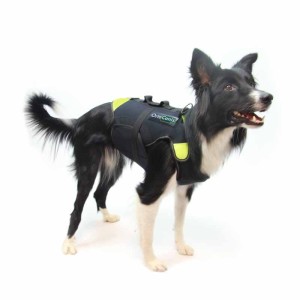
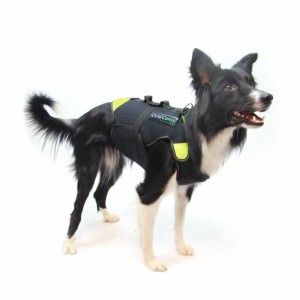
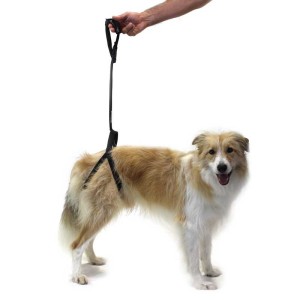
Dog harness with therapeutic properties works, so to speak, as a restraint for the dog. The owner passes under the part of the body that has damaged mobility (hind legs, front legs) so that the handles are up. In this way, a fastening effect is created. The owner carries part of the weight of the dog so that this is not an impediment.

This makes the dog feel lighter and regain some of its agility. Imagine, for example, a dog with a damaged hind leg. Every time he carries his weight, he hurts himself, so he stops exercising and in the end his whole body suffers. It is increasingly difficult for that dog to recover its good state of health.

With a dog harness for the hind legs, the owner of that dog offloads part of its own weight. That way, having nothing to pressure his injury, the dog can return to exercise the muscles without forcing it. Thanks to this, he will recover mobility much earlier and the days of the injury will be a distant memory.

Dogs that will not regain mobility

But there is another type of dog that can benefit from the dog harness: those who will never regain their mobility. Wheelchairs for dogs give them the possibility to move freely and have a dignified and relatively comfortable life, but, at the end of the day, they are linked to something that makes them uncomfortable and heavy.

arnes-de-soporte-para-perroA dog harness is a way to give you back that feeling of freedom from time to time. Thanks to the support of his sleep, the dog has the feeling of being able to run autonomously again on his four legs. You will see how your best friend is agitated with happiness by feeling free and light again to run and play for a while. A time that for him means everything.

Dogs need to move in order to lead a good life. It’s not just about the joy they feel when running and playing. Good physical activity is crucial to prevent injury, atrophy or contract diseases related to a sedentary lifestyle. A dog harness is a great way to give your pet a chance to live healthier and happier.

Dogs, due to their physical and movement particularities, are more likely to develop certain injuries throughout their lives. Read on to be aware of the most common canine injuries.

Dogs usually and should lead an active life. Movement helps them prevent obesity, sedentary lifestyle and depression. However, their physical activity and physiological particularities make our best friends end up developing certain canine injuries over time. The best way to help them is to be aware of these canine injuries and remain vigilant so that we can identify the first signs of pain or discomfort from our pets. Read on to get all the information about canine injuries you may need.

Lesiones caninas más habituales

Most common canine injuries

Although dogs have a tendency, due to the genetics of the breed to which they belong, to suffer more canine injuries than others, there are certain parts especially prone to accuse the damage of bad falls, bruises or the wear and tear of age.

Joint injuries

The joints of dogs are especially exposed to canine injuries. A bad fall when jumping or trauma (caused by hitting an obstacle, playing with another dog or for more serious issues, such as a hit-and-run) can cause different canine injuries. Examples include bone dislocations or breaks. Special mention deserves canine hip injuries. The hips of dogs suffer especially with all these traumatisms. But, in addition, age seriously wears down the hips of dogs, which can cause very painful herniated discs . Indications of these types of injuries are mobility problems and signs of pain when moving.

Muscle injuries

These canine injuries occur especially when you go from less to greater physical activity. It is one of the so-called “spring canine lesions“. This is because dogs are usually more inactive during the winter months, due to bad weather and cold, which do not invite to maintain the same rhythm of outings and physical activity. With the arrival of good weather, many dogs happily resume their activity. However, his muscles, tendons and ligaments have gone through a time of inactivity that has resented his endurance. This can lead to soft tissue trauma, as well as cervical and neck pain. Some signs of these canine injuries are stiffness and lameness.

Nail injuries

Dogs use their nails to try to dig, scratch surfaces and play with other dogs. Given their curious and exploratory nature, many dogs, especially puppies, try to dig into hard surfaces, such as cement, and end up fracturing their nails. Especially if they have not been cut regularly and are too long. These canine lesions are very painful. If you notice that your dog is limping, bleeding or licking his paws excessively, he may be suffering from these canine injuries.

You can’t stop your dog from getting injured. What you can do is be informed of the canine injuries you may suffer and be aware of the signs of pain. If you think your dog may be suffering from one of these canine injuries, take him to the vet as soon as possible. He will be able to advise you on the ailment and start the treatment so that your best friend is healthy and happy again.

Ayudas para perros con artrosis