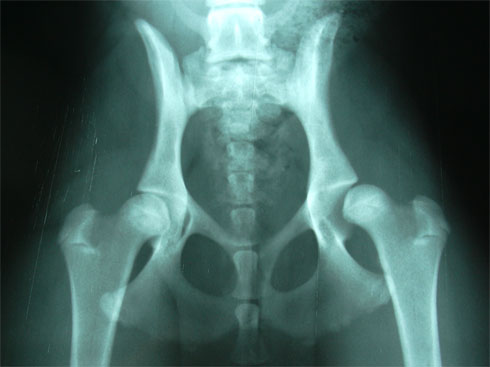
It is one of the most frequent diseases in dogs, especially large breeds.
In a mismatch between the head of the femur and the acetabulum, that is, a bad gear of the hip joint. The femoral head is partially outside the acetabulum and the hip cannot work properly.
Yes, hip dysplasia practically does not exist in Greyhounds and yet it is very common in San Bernardo and Mastines. It is also quite common in the German Shepherd, the Golden Retriever and the Rottweiler among other breeds.
There are several degrees of dysplasia, but there are also different ways to measure it, the most common being an X-ray that should be done on dogs near the year of life. This x-ray must be performed in a very specific position and with the muscles relaxed, so it is usually necessary to anesthetize the dog.
Normally lameness in dogs from 5 to 10 months but can remain without problems during youth and adulthood and debut with major problems in the geriatric period. Movement to the sides of the hips may also be indicative of hip dysplasia.
They are two different problems, but hip dysplasia, the mismatch of the joint, can cause over time that this joint degenerates and ends up suffering from osteoarthritis in the hip. Osteoarthritis is what hurts, especially in old age. Dysplasia may be more responsible for the dog’s development of osteoarthritis.
There are several treatments, various surgeries before the year of life and other methods such as hip prosthesis when the dog is older and has finished growing.
We also have palliative treatments such as anti-inflammatories or cartilage protectors (chondroprotectors). In very serious cases you can put a canine wheelchair and the dog continues to walk but without bearing the burden of its weight.
Ortocanis.com Technical Team
Canine orthopedic surgery is an increasingly common procedure in dogs with joint problems or trauma,…
Hydrotherapy for dogs has established itself as one of the most effective techniques within canine…
Mobility is one of the fundamental pillars of the quality of life of dogs. An…
Physiotherapy for dogs is a fundamental tool to improve the quality of life of those…
Over the years, our dogs age, and with old age come physical and mental changes…
Anti-inflammatory drugs, called NSAIDs (nonsteroidal anti-inflammatory drugs), are the most commonly prescribed pain reliever in…