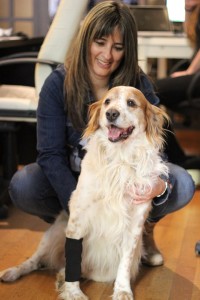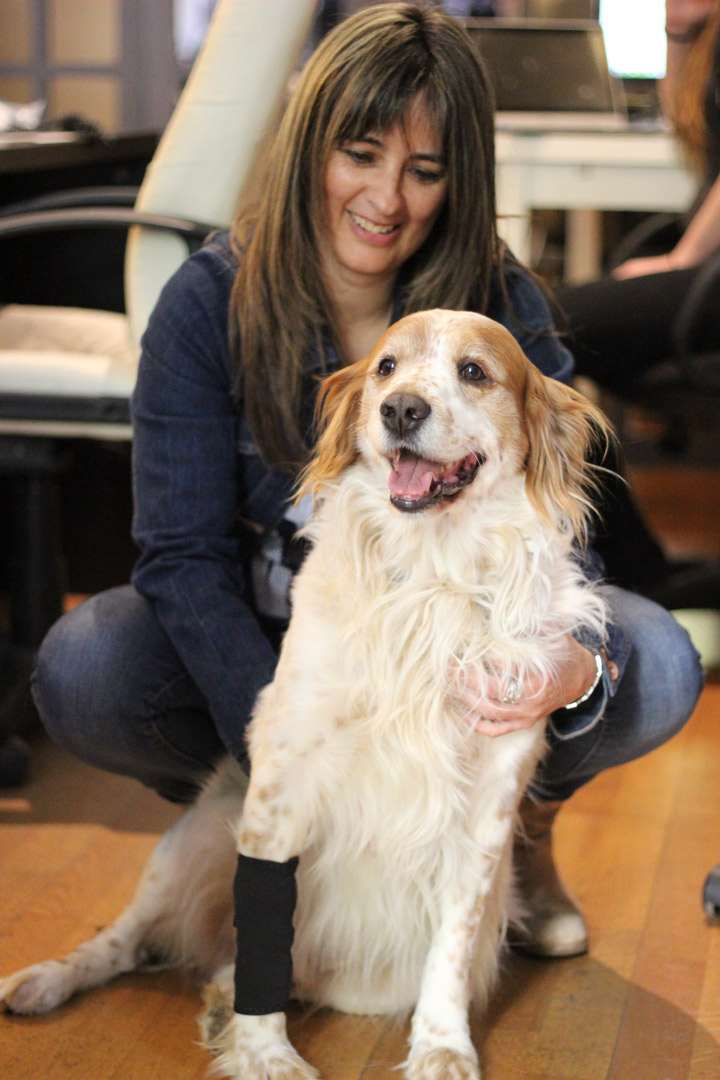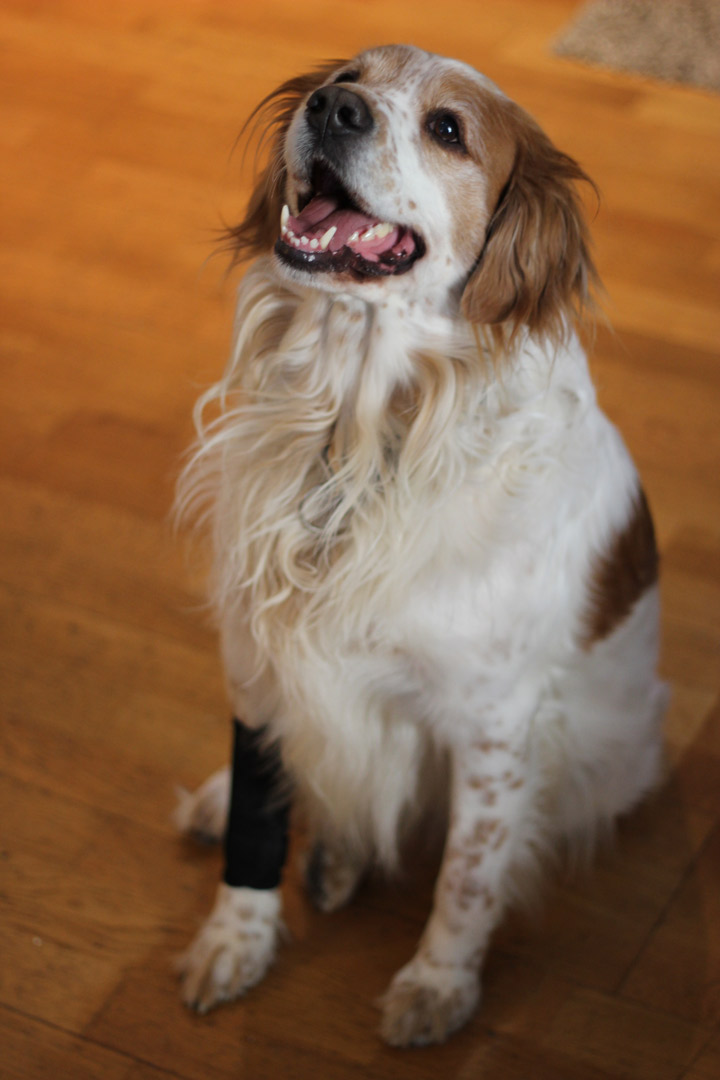

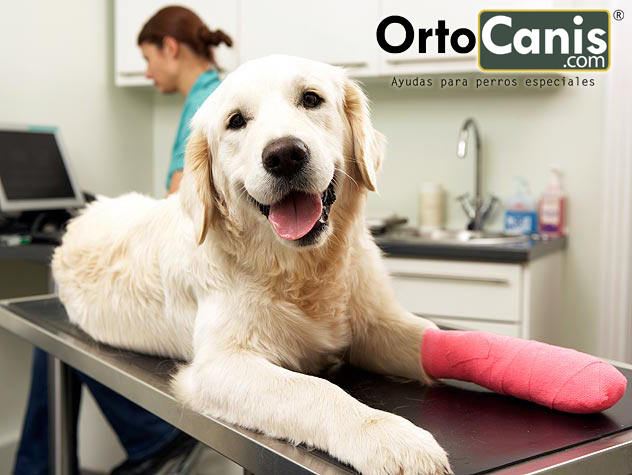
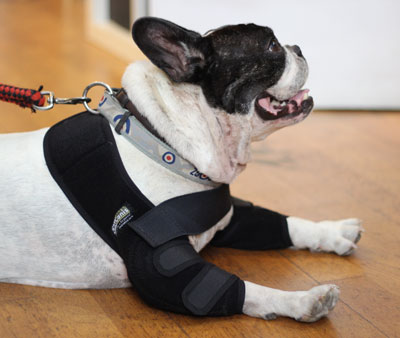
If your dog is recovering from an illness that requires a bandage, splint or sling, proper care is essential for his recovery. Complications are much more likely to occur in dogs that do not receive proper care and supervision.
Splints , slings, and bandages can cause serious problems for your dog if:
- they hurt you
- slip with them
- they twist
- They stay for a long time
- they get wet
Splints, slings, and bandages must be kept dry and clean at all times. If they get damp, wet or dirty, it is necessary to remedy this as soon as possible.
When the animal goes outdoors, a temporary waterproof coating may be applied to the bandage , sling, or splint to keep it dry. The cover should be used for short periods only (no more than 60 minutes at a time) and should be removed immediately upon returning home.
If the cover is left on for more than 60 minutes, moisture can accumulate inside the liner, causing the bandage to become soggy.
It is generally recommended that dogs remain indoors as much as possible while they are bandaged and rehabilitating. A wet bandage can quickly cause a skin infection. Change the bandage as soon as possible.
Check the toes and the tissue at the bottom of the bandage or splint at least once a day. If you notice any swelling the bandage may be too tight or shifted and needs to be checked out by a vet right away and probably replaced. In bandages or splints the swelling may appear as an extension apart from the toes. Compare with the other foot to detect differences.
If the bandage or splint appears to have slipped or twisted, smells bad, or has been damaged by chewing, your dog needs a new one.
You should monitor the skin near the edges of the bandage, sling, or splint for chafing, redness, or rashes. If any of these problems appear, take your dog to the vet as soon as possible.
Activity restriction is usually an important part of the healing process, as long as you have a bandage. Significantly restrict the dog’s activity unless your vet tells you otherwise. This includes keeping your dog on a leash on outings, if he is too active the bandage may lose its function.
Prevent slippery floors while leg, foot, back, hip, neck or shoulder bandages are in use.
It is in the animal’s best interest to avoid playing with other dogs or children during rehabilitation.
It is imperative to work closely with your vet during this period. Complications are much more likely to occur in pets that are not carefully watched.
Check bandages usually every 48 hours, from when they are placed. Check splints and slings every 1-2 days, depending on the needs of the patient.
IMPORTANT POINTS :
Use medications according to medical prescriptions.
Be sure to follow all activity restriction instructions from your veterinarian.
Watch carefully for any splint, sling, bandage, or post-surgical instructions (these can be the difference between a successful recovery and more problems).
Monitor your dog carefully and perform check-ups as directed by your veterinarian.



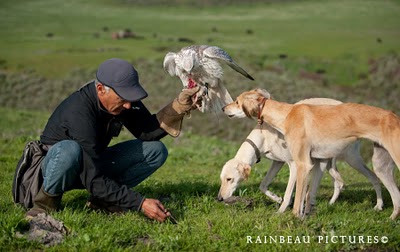
 I write these lines after a long conversation with Dr. Alberto Palleroni, an expert in psychology and animal neurology at Harvard University. To give you an idea. On the day of Felix Rodríguez de la Fuente’s tragic accident on his trip to Alaska, Alberto was traveling with him in another helicopter. The dog and human being have been sharing paths for a long time. These have not always been in favor of the company, but rather of the need of both. The wolf shared the carrion that the human left of the large prey and the human shared the hunt for the small pieces hunted by the wolf. Little by little our species have adapted in a surprising way. Together we chased prey for 160 kilometers to hunt them down. Biomechanically we were practically the only ones who could be prepared. We evolve with them and thanks to them. We conquered the Arctic and the Middle East thanks to your help. Even Muhammad introduced into the Qur’an a note about the importance of the
 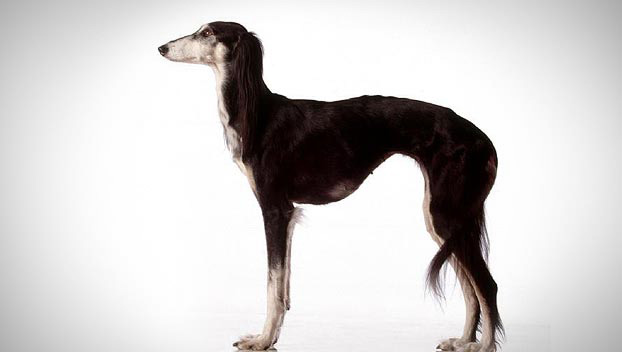 The Saluki is the most evolved dog. Our survival depended on its purity. They can run at 80 kilometers per hour for about 16 kilometers which no dam was able to withstand no matter how fast it was. Over the past 200 years, our endeavor to create artificial breeds tailored solely to our contemporary needs has not been a fair deal for such an old friend. Most of the pathologies in the hip of current dog breeds is due to artificial variation of the knee angle. What is known by a companion of Alberto Palleroni, Dr. Donald B. Slocum, world-renowned leader in orthopedics and one of the fathers of sports medicine as a subspecialty of Orthopedics. One of its legacies are the well-known Slocum plates used in veterinary orthopedic surgery globally. The angle of the knee has come to vary, in relation to the ancient Saluki race, up to 30 degrees. Biomechanically that variation is what is wreaking havoc on the hips of today’s races. Hopefully we will find together, a way to redirect the deep wound we have made in the DNA of our