At Ortocanis we work to improve the lives of dogs with mobility problems, that includes dogs with some permanent physical disability as well as dogs that need rehabilitation. Marta Subirats, our collaborator, tells you about the rupture of the anterior cruciate ligament.

Of the four ligaments that make up the dog’s knee, rupture of the anterior cruciate ligament is one of the most common pathologies and the most frequent cause of secondary degenerative osteoarthritis in the knee joint. The functions of the cranial cruciate ligament are to limit internal rotation of the tibia and cranial displacement of the tibia relative to the femur and to prevent hyperextension of the knee.
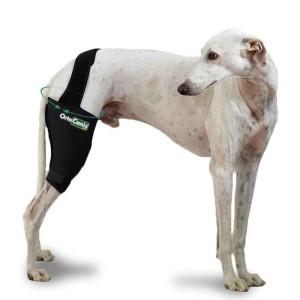
protector-rodilla-perro (1)If your dog appears with an acute limp, does not want to put his paw on the ground, or seems to take a few steps and shrinks it, and his knee swells, it is possible that his anterior cruciate ligament is affected.

There is a predisposition in certain dogs to suffer this injury. On the one hand we find small-medium sized dogs (breed or not) with short legs and generally overweight and, on the other hand, large and giant breeds that, due to their morphology, have a tendency to suffer injuries to their ligaments. Among the latter we find the Labrador, Rottweiler, Neapolitan Mastiff, Boxer, etc. In any case, this is not a rule and any dog can have a ligament injury throughout his life.

Apart from the breeds mentioned, there are other factors such as being overweight, sedentary lifestyle, endocrine disorders, sports dogs that do not warm up properly, stairs, sudden climbs to the sofa or the car, or activities that subject the ligaments to micro-trauma and that finally end up damaging them with partial damage or total breakage.

There are two types of treatment, conservative and surgical, whether one or the other is chosen, the animal must carry out a correct recovery of that knee so that it becomes functional again and thus avoid recurrences.

The goals of recovery are to decrease pain, swelling, and lameness, to regain full mobility, muscle mass and strength, and control over the joint.

Physiotherapy varies depending on the animal and the type of treatment, conservative or surgical and, in the case of surgery, the type of intervention. There are surgeries that require more rest and stabilization than others. The recovery process is considered complete when the animal is able to perform daily activities and its knee is able to receive loads and movement without risk of re-injury.

It is important that your pet receives rehabilitation treatment by trained professionals who will choose the best techniques for a quick and effective recovery. Among the most used therapies to treat a crusader problem we find: massages, mobilizations, therapy with currents, ultrasounds, laser, aquatic therapy, balance and coordination training therapy.

During the recovery period it is important that:

– Take your pet on a leash during walks and avoid sudden departures towards other dogs and changes of pace, especially at the beginning of recovery. Your veterinarian or therapist will modify the intensity of the activity as the recovery period progresses.

– Keep the dog off slippery floors. A common cause is recurrence of the ligament tear accompanied by medial meniscus injury.

– Avoid ramps and stairs at the beginning of treatment in operated animals and in animals undergoing conservative treatment. Once rehabilitated, ramps can be used to help get on the sofa and in the car, since it is recommended that they do not do it alone, there could be a recurrence.

– It is recommended that they rest on soft and clean surfaces, but that they are firm enough to help the incorporation of the animal special mattress for dogs

– Keep the skin clean and dry.

– Correct diet and weight control. Being overweight harms the joints and generates moreprotector-rodilla-canina-perro articulada pain for the animal
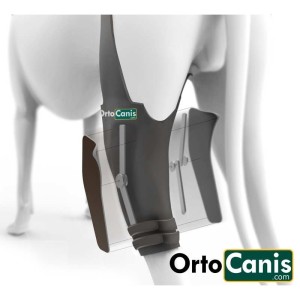
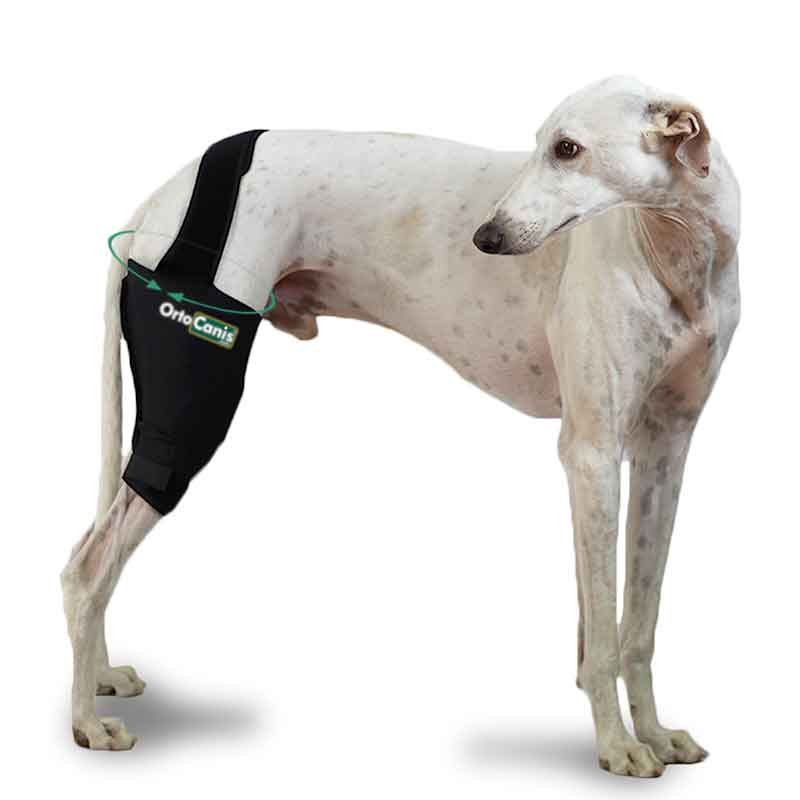
During recovery or in those animals in which knee instability may arise, the use of a hinged knee orthosis can benefit you and prevent recurrence or possible complications.

Knee orthoses can be used in cases where surgery is not possible or there is some impediment to perform it. These splints, designed exclusively for knee problems, allow progressively increasing degrees of flexion-extension while limiting unwanted movements, providing stability throughout the recovery.

Marta Subirats

Ortocanis physiotherapy technique

There are many treatments that exist for the rehabilitation of our little friends, one of the least known; thermotherapy!

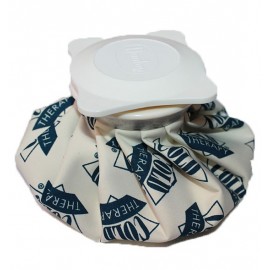
Thermotherapy is the application of heat to the body for therapeutic purposes. There are different ways of applying heat to the animal: heat packs , parafango, ultrasound , short wave, infrared , water vapor, contrast baths and moist heat.

It has therapeutic effects; It is anti-inflammatory, antispasmodic, analgesic, sedative, relaxing and decontracting.

At the cellular level, it increases metabolism, while at the level of the blood vessels, it acts by producing thermoregulation that, at the local level, will produce brief vasoconstriction followed by vasodilation, giving rise to hyperthermia. In addition to a vasomotor reaction.

At a deep level, hyperthermia also occurs. It will produce a reflex action as a consequence of the vasomotor modifications of the local application that will produce an improvement in cell nutrition, an anti-inflammatory and analgesic effect.bolsas-de-agua-caliente-o-hielo

On the heart it produces tachycardias and modifies blood pressure in local applications and if its application is increased, it produces an increase in the temperature of the stimulus and decreases blood pressure with an increase in volume.

In the blood, it produces an alkalinization of the blood pH, decreases coagulation, blood viscosity and, consequently, there is a greater lymphatic supply to the tissues.

On the skin there is an increase in temperature, with an increase in local circulation and decreased sensitivity.

The heat on the nervous system increases sensitivity in short-term applications, while if the duration is prolonged, it produces a decrease in sensitivity, sedation and analgesia.

At the muscular level, it produces relaxation, is antispasmodic, decreases excitability, increases tissue elasticity and decreases muscle tone. And, on the respiratory system, it produces an increase in the respiratory rate.

There are a number of circumstances in which heat cannot be applied:

  • Cardiac animals.
  • In acute inflammations 24-72 hours
  • Animals that present hypersensitivity or even allergic reactions
  • Areas:
    • Open, deep, or infected wounds
    • local infections
    • Burns
    • sensitivity disturbances
    • circulatory deficits
  • leishmaniasis

Heat can be applied once the acute phase of the injury or surgery has ended: fractures, contractures, tendinitis, dislocations, etc., or in chronic cases such as geriatric animals or those with osteoarthritis.

It is necessary to control the animal’s skin at all times and if the skin is very red or the animal is upset, the treatment should be stopped. It is necessary to place a towel between the animal and the heat, never place it directly, as there is a risk of causing skin burns.

There are special protectors or straps for a better fastening of the hot pack.

Orthocanis team

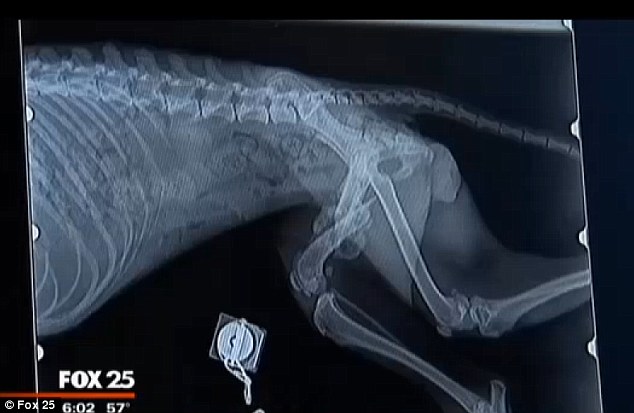
x-ray dog with fractures

A little more information from Ortocanis, do our articles help you?

Definition

Disc herniation is a neurological disease that affects the spine, when part of the intervertebral disc presses on or enters the spinal cord.

The dog has 7 cervical vertebrae, 13 thoracic, 7 lumbar, 3 sacral and, depending on the breed, 20-23 tail vertebrae. The intervertebral discs act as shock absorbers between the vertebrae that make up the spine and at the same time give it its mobility.

Two types of hernia and their symptoms

It mainly differentiates between two types of disc herniation: Protrusion and Discus Extrusion.

We speak of a Protrusion when the intervertebral disc moves and thus presses on the spinal cord but the spinal cord tissue is intact. The dog shows pain, walks awkwardly, sometimes with a hunched back and may drag its legs a little.

Extrusion means that the disc tissue has ruptured and disc material has entered and damaged the medulla. In this case the symptoms can be similar to that of the Protrusion but more serious. Depending on the location of the hernia, it causes paralysis of the forelimbs and/or hindlimbs. The dog loses sensitivity in those extremities, which manifests itself in the absence of pain, does not stand up and begins to crawl. It may also look like incontinence.

The most important thing in these cases is the rapid diagnosis and intervention of the veterinarian!!

A slight Protrusion can be treated with medication and almost absolute rest, however an Extrusion has to be operated to remove the disc material from the marrow.

But beware – each case of disc herniation is different and depends a lot on its location, to what degree it has pressed or damaged the spinal cord and how long it has been between the first symptom and diagnosis. That is why it is very important to choose a good neurologist.

Physiotherapy – recovery

In both cases, physiotherapy is very important for a good and faster recovery of the animal.

Various massage methods help stimulate the peripheral system and increase blood circulation. Passive joint movement prevents loss of mobility in affected limbs. Electrotherapy stops muscle atrophy and is the only passive way to increase muscle mass.

When the dog is already standing, several active exercises are applied to improve stability, balance and coordination.

The owner must take great care with the feeding of his dog during recovery and consult the veterinarian, since the loss of mobility and the same amount of food lead to weight gain – something that should be avoided in any case. Every extra gram makes it more difficult for the dog to get up and walk again.

In the event of a cervical hernia, the use of a harness is recommended to avoid sudden movements in this area and also to raise the food and water bowls so that the dog does not have to bend down too much.

andrea klein

animal physiotherapist

Collaborator of Ortocanis.com