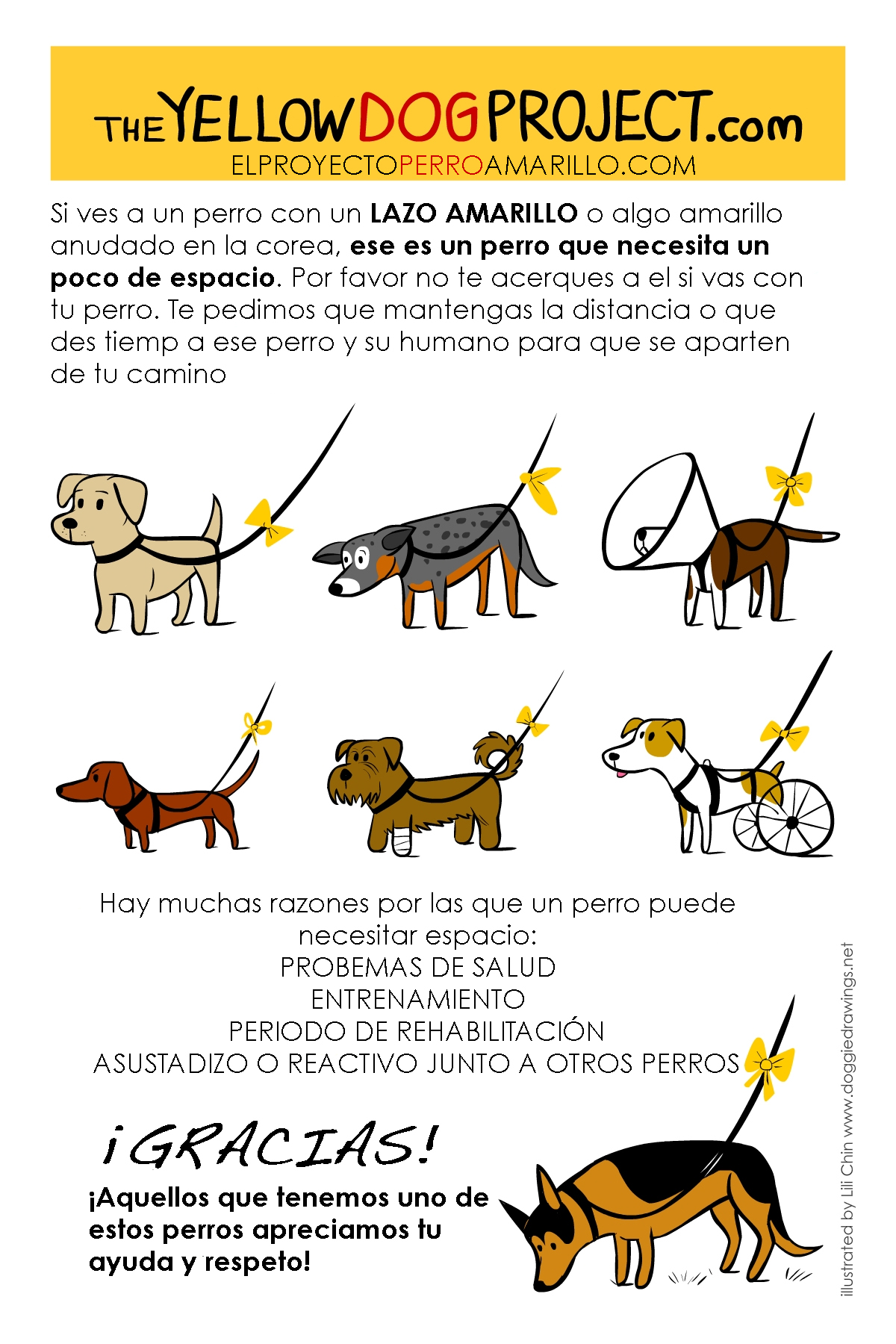
The Yellow Dog Project is a campaign that appeared in Sweden and has already spread in several countries. It is about putting a yellow knotted tape on the leash of the dog that needs more space and in this way both the owners of other dogs and children will know that they should not approach.
There may be several reasons why it would be convenient to put the tape: for suffering from a health problem, for being injured, for being afraid, for being rehabilitated, for being in heat, for having had a bad experience or simply for not being a very friendly dog.
So if at any time you see a dog with a yellow ribbon on its leash, you know you should not approach.Perro con cinta amarilla

Although genetics is the determining part of dysplasia by 99% percent, it is nutrition that is the most important part. Once you have diagnosed dysplasia you can NOT do anything genetically, you only have to influence nutrition and physiotherapy. It’s that simple.

I teach you five key secrets in nutrition to make your best amig@’s dysplasia more bearable. In addition to an Expert in Canine Nutrition, do not forget to also consult one in canine physiotherapy, it can help you a lot.

Nutrición Ortocanis

GRAINS IN THE DIET

Unfortunately the vast majority of commercial veterinary diets for dogs are bad, why? Because they have a lot of carbohydrates in the form of grains and / or cereals, they do it to reduce costs, they are cheaper than animal protein, the nutrient that your dog really needs.

Dietary grains or cereals have been shown in dogs to promote continuous and exaggerated insulin secretion* as well as joint inflammation. I remind you that your dog does not have the physiology to split starches, carbohydrates, that is, grains and cereals. It is a carnivore, do not forget, do not feed it as if it were cow or chicken.

GLYCOSAMINOGLYCANS

Don’t panic with the name. They are nutrients that promote cartilage health. Patients with dysplasia problems (and arthritis in general) have shown that they can absorb toxic compounds or substances, some of which affect the joints.

How can we lessen this? If you give your perr@ some cartilage (rich in glycosaminoglycans) in the diet, these are poorly absorbed and remain in the intestinal lumen.

Glycosaminoglycans are complex carbohydrates that have the ability to adhere some of these toxic substances on their surface while they are in the lumen of the intestine, and thus be excreted in the excrement without passing into the bloodstream and therefore prevent their arrival and implantation in the joints.

A substitute for cartilage? There are nutritional supplements based on glycosaminoglycans, in short, they are more practical and come concentrated in a pill. There are many brands on the market: Cosequin, Synoquin, Hyal oral…

BELOW OR ABOVE WEIGHT?

If I have to choose to be slightly above my weight, I prefer the latter, and the same applies to my dog.

As an Expert in Canine Nutrition, this topic, that of weight, is one of the most recurrent. Owners of puppies of large and/or molossian breeds (mastiffs, Rottweiler, Siberians, shepherds, doges…) want “stuffed” puppies growing as much as possible. Gross error.

Remember, if you want a healthy dog orthopedically weight is key (it also applies to us) Have you seen overweight wolves, lions or hyenas in the wild?

How do you know if your dog is at an appropriate weight? The best allies for this are sight and touch. I recommend you visit the following link so that you learn how to determine the body condition of your dog.

BONES IN THE DIET

There are many myths in dog nutrition, created, above all, by the pet food industry. I remind you that your dog is a carnivore, every carnivore eats bones in nature, moose, rabbits, all kinds of birds (such as chicken or chicken) and ALL BONES, absolutely all, splinter and do not die!

It refreshes your memory. Commercial foods (pellets) have been massively and widespread in the last two decades. Before everyone gave homemade food (leftovers) including bones.

Bone is a mine of vitamins, fats and minerals of the highest quality, do not forget that bone is mainly made up of minerals such as calcium, phosphorus, fluoride, magnesium … water, and organic matter such as collagen. All of these nutrients are key to bones and joints, among other organs.

By the above I do not mean that you start introducing bones into the diet without knowing. COOKED BONES are the dangerous ones. The best diets are homemade, and if they include bones (RAW) occasionally, better.

NUTRITIONAL SUPPLEMENTS

If I am given the choice between providing a quality diet for a dog without supplements (the best diets are well-made homemade ones) or a poor quality diet and a quality supplement, I stay with the first without a doubt.

Now, if I can choose for my dog a quality homemade diet, alternated with a commercial diet, also of quality, and added with a specific supplement for his dysplasia problems Bingo!

With the arrival of orthomolecular nutrition (specific nutrients for specific situations) and the advancement of science, many nutrients appear that at the molecular level have a positive impact on the patient with dysplasia problems.

From vitamin E, bioflavonoids to omega three and enzymes. There are more and more of these nutrients for multiple situations. Regarding the subject we are dealing with, dysplasia, it would be something that you should not overlook and ask for advice from a specialist in the subject.

Carlos Alberto Gutierrez / Veterinarian collaborating with Ortocanis.com

Treatment of hygroma of the elbow

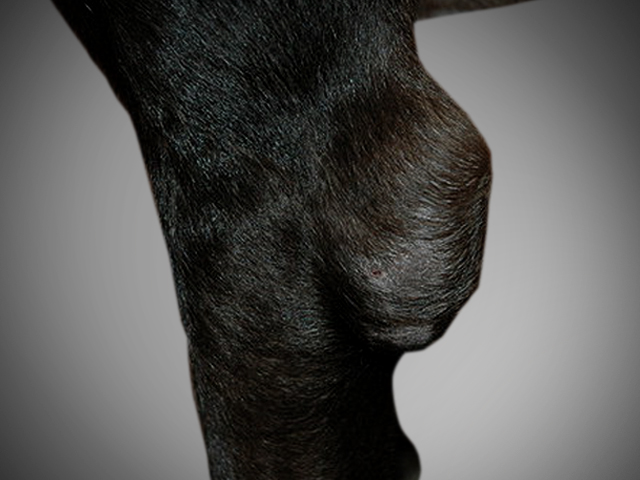
Elbow hygroma is a disease that mainly affects large short-haired dogs, such as Big Danes, Greyhounds and Dalmatians. In dogs with elbow hygroma, a fluid-filled sac appears on one or both of the dogs’ elbows. In rarer cases, hygromas can develop in the hock. In many cases, elbow hygromas do not cause pain or difficulty. However, they can become infected, which can be painful for the dog and requires treatment. Other animals susceptible to developing hygromas are dogs that are not very active or are recovering from illness or injury.

Causes
Hygromas develop because of recurrent trauma to a dog’s elbow or elbow. For example, resting constantly on wood, cement, or other hard surfaces can cause stress on the joint and cause hygroma. This condition mainly affects large dogs, as there is a greater weight on their elbow joints when they are lying down.Hygroma codo

Bandage
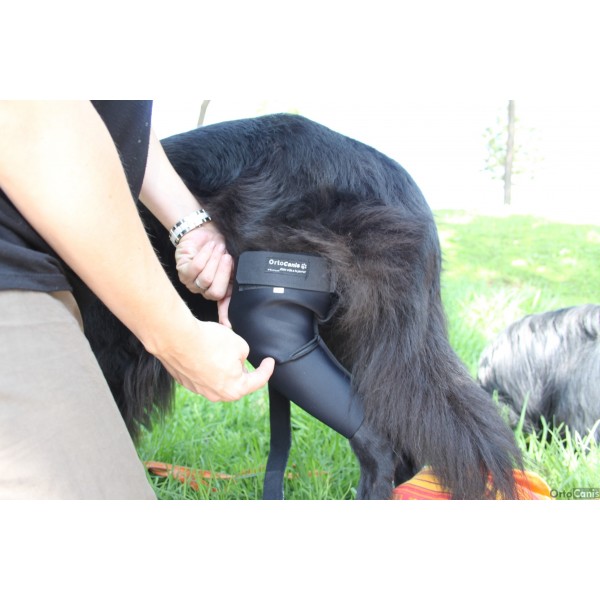
In some cases, bandaging a dog’s elbows can help prevent hygromas from getting worse. Bandages will prevent contact with hard surfaces and in turn avoid problems caused by hygroma. In addition, some products such as the canine elbow protector or the dog knee protector will prevent the hygroma from having additional contact with the hard ground. Ask your veterinarian how you can help your dog.

Drainage
Some veterinarians recommend that hygroma fluid be drained with a needle or syringe. Getting the fluid out is not considered an effective treatment because the needle can cause an infection. In addition, drainage can only improve the condition temporarily. If the dog continues to lie on hard surfaces, the hygroma will become larger, that is, the drainage will have to be done on a regular basis.

Surgery
Some veterinarians may recommend surgery to treat elbow hygroma, especially in cases where there is infection or when the hygroma has ulcerated. In surgery, the skin must be drained and removed. Since hygromas can grow quite large, it may be necessary to make skin grafts to cover the affected area. Healing from surgery takes about a month, and the dog will need to wear a splint during recovery to protect the affected area.

Prevention
The best way to prevent your dog from developing an elbow hygroma, or to prevent an existing one from worsening, is to provide the dog with a soft surface for him to rest and sleep. If there is no carpeted area available, make the dog a soft bed and leave it where he likes to lie down. In the event that the dog is inactive because he is recovering from an illness or injury, have him get up and move (at least enough to change the position he is lying in) several times a day.

Written by Anna Aronson

source: eHow

Canine osteoarthritis is a very common disease in dogs. It appears as a result of the inevitable evolution of a joint that ages or becomes increasingly fragile due to trauma or malformation. This is a very painful condition that needs to be treated right away. It can affect all the joints of the body, both those found in the anterior and posterior extremities, as well as those that form the spine. In the case of senior dogs, the most common is that this disorder affects several joints at once.

protector rodilla para perroThe articular surface is covered by a tissue called cartilage, which plays a role very similar to the shock absorbers found in cars. In addition, it prevents the underlying bone from deteriorating due to the repeated rubbing to which it is subjected by continuous movement. Osteoarthritis is characterized by a progressive destruction of this cartilage and by an abnormal bone proliferation at the edge of the articular surfaces known as osteophyte, also called ‘parrot beaks’ when they are located in the spine. The affected joints lose elasticity, cause pain and prevent the animal from moving normally.

Evolution of deterioration
As a rule, this ailment affects, first of all, the high joints of the limbs: hips and knees, shoulders and elbows. Symptoms are more or less important depending on the number of joints affected. However, there is an unequivocal sign that makes us intuit that the animal is affected. Lameness usually manifests itself when the dog gets up and starts up after remaining immobile for a long time.

The pain prompts the animal to avoid support on the affected limb and, being impeded, stops running, and of course, jumping. As it evolves, the pain increases. When making certain movements, the dog emits small moans, it is even possible that the animal is irascible and tends to present aggressiveness when we try to manipulate the affected joint.

In more advanced cases, the joint may be partially blocked, making it impossible to perform certain movements. At this point, the animal hesitates to use the diseased limb. In addition, this lack of activity leads to a significant deterioration of the musculature surrounding the joint. As a result, the diseased area begins to atrophy, which increasingly complicates its use.

Two fundamental types
As a general rule we distinguish two types of osteoarthritis: primary and secondary. The first type usually affects elderly animals and appears due to the normal aging suffered by the joints due to the passage of time. In fact, it is a progressive and inevitable wear of the articular cartilages. Usually, this type of osteoarthritis affects different points at the same time.

As far as secondary canine osteoarthritis is concerned, it appears as a consequence of a triggering factor, which causes the affected joint to stop functioning normally. For example, this type of osteoarthritis can appear due to trauma – a sprain, a fracture, etc. – or due to a birth malformation, such as hip dysplasia.

Another very common cause that causes the appearance of secondary osteoarthritis is obesity. If you do not control the diet your friend can have a weight well above the average that we find in the breed. The joints are not made to support such a significant overload of kilos, so they deteriorate easily. Unlike primary osteoarthritis, secondary osteoarthritis can affect animals of all ages and, as a general rule, usually affects only one joint.

Issue a diagnosis
The diagnosis of this disease can be based on three factors: the pathological history of the animal, gait examination and manipulation. When studying the history, the veterinarian must take into account old joint fractures, injuries that the animal has suffered a long time ago, as well as possible sprains. When observing the gait will look at whether the dog limps, even if only very slightly and incipiently, since lameness is an unequivocal symptom of the disease. Finally, when manipulating the affected area it is very possible for the animal to show signs of pain.

Often, the region in which the diseased joint is located is usually somewhat deformed due to osteophytes and muscle atrophy caused by the absence of physical activity. Many times a characteristic snap is detected when we move it. Through the radiological study, the animal health specialist will be able to determine the severity of osteoarthritis and establish the most appropriate treatment. Among the possible treatments, the appearance of specialized supports for some limbs that can effectively combat the deterioration of the animal’s quality of life stands out. The use of these supports is effective and has proven in countries such as the USA to be treatments as innovative as successful, however their use should be consulted with the veterinarian or animal physiotherapist.

Orthocanis Team

British scientists managed to reverse paralysis in dogs by injecting them with cells extracted from the lining of their own nose.

All of the animals in the study had suffered spinal cord injuries that prevented them from using their hind legs.

Researchers at the University of Cambridge, England, are cautiously optimistic that the technique may eventually play a role in treating human patients.

The study, funded by the Medical Research Council (MRC) and published in the neurology journal Brain, is the first to test transplantation in “real-life” wounds and not in laboratory animals.

Foreign scientists of the lining of the nose of animals are called olfactory enveloping glia (OEC) cells.

OLFACTORY ENVELOPING GLIA CELLS

The only part of the body where nerve fibers continue to grow in adults is in the olfactory system.

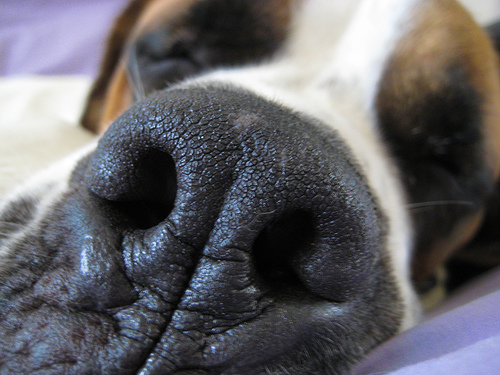
The enveloping cells of olfactory glia (OEC) are located at the back of the nasal cavity and surround the receptor neurons that allow us to smell and convert those signals in the brain.

Nerve cells need to be constantly replaced and this is promoted by the OCs.

For decades, scientists have weighed in that OECs could be useful in spinal cord repair. Initial trials with OEC in humans suggest that the procedure is safe.

These were cultured and reproduced for several weeks in the laboratory.

Of the 34 pet dogs that participated in the proof-of-concept trial, 23 received transplants of these cells at the site of injury and the rest received an injection with a neutral fluid.

Many of the dogs that had received the transplant showed considerable improvement and were able to walk on an exercise machine with the support of a harness.

None of the animals in the control group managed to reuse their hind legs.

Caution and optimism

The research was a collaboration between the MRC’s Centre for Regenerative Medicine and the University of Cambridge’s Veterinary School.

Professor Robin Franklin, a regenerative biologist at the STEM Cell Institute at the MRC and the Wellcome Trust and one of the report’s authors, said: “Our findings are extremely exciting because they show for the first time that transplanting these cell types into a severely damaged spinal cord can bring significant improvement.”

“We are hopeful that this technique can restore at least a small amount of movement in human patients with spinal cord injuries, but that is a far cry from the fact that they could recover all of their lost functions.”

Professor Franklin says the procedure could be used in conjunction with pharmacological treatments to promote nerve fibre regeneration and bioengineering to replace damaged neural networks.

Nariz
The animals received a transplant of olfactory cells.

The researchers claim that the transplanted cells regenerated nerve fibers throughout the damaged region of the spinal cord.

This allowed the dogs to regain use of their hind legs and coordinate movements on their front legs.

But no new long-distance nerve connections like those required to connect the brain to the spinal cord were developed.

According to MRC scientists in humans this would be vital for a spinal cord injury patient who has lost sexual and bowel function and bladder control.

Professor Goeffrey Raisman, Chair of Neural Regeneration at the University of London, who discovered olfactory enveloping glia cells in 1985, says: “This is not a cure for spinal cord injuries in humans, which may still be a long way off.”

“This is not a cure for spinal cord injuries in humans, which may still be a long way off. But this is the most encouraging development in several years and is a significant step on the road to achieving it.”

Prof. Goeffrey Raisman


“But this is the most encouraging development in several years and is a significant step on the road to achieving it.”

“This procedure has allowed an injured dog to walk with its hind legs, but the range of much higher functions that are lost with a spinal injury, such as those of the hand, bladder function, temperature regulation, for example, are more complicated and still very distant.”

Jasper, a 10-year-old dachshund, is one of the animals that took part in the trial.

Owner May Hay told me that “before the treatment we had to transport Jasper in a car because his hind legs were useless. Now he walks all over the house and garden and can keep up with other dogs. It’s wonderful.”

Source: BBC

Elbow dysplasia is a very common degenerative disease in young dogs. The elbow of dogs is one of the most congruent and stable joints of the body, allowing, due to its complexity, two axes or degrees of supination-pronation movement of the forearm and flexion-extension. Its complexity is given by its composition: humeroradial joint, humeroulnar and, proximal radioulnar.

Elbow dysplasia was initially used to describe the non-union of the anconeal process (AUP). Currently, osteochondritis dissecans (OCD) of the medial condyle of the humerus, the fragment of the coronoid process (FPC) and, the incongruence of the elbow (INC) are also included within this term. When one of these ossification defects occurs in an elbow, inflammation originates and over time an osteoarthritis is triggered in which cartilage degeneration occurs; for that reason, all these conditions are commonly associated with osteoathrosis of this joint and are an important cause of pain and claudication of the forelimbs in large and giant breed dogs such as the German Shepherd, Labrador, St. Bernard, Rottweiler, Neapolitan Mastiff, among others.

Of genetic origin multifactorial, especially in OCD and FPC. It affects males more than females and can occur uni- or bilaterally. The genetic component is the one that has the greatest influence although, the appearance of this pathology can also occur due to food, weight, environment, quality of ligaments, a lot of physical exercise or trauma.
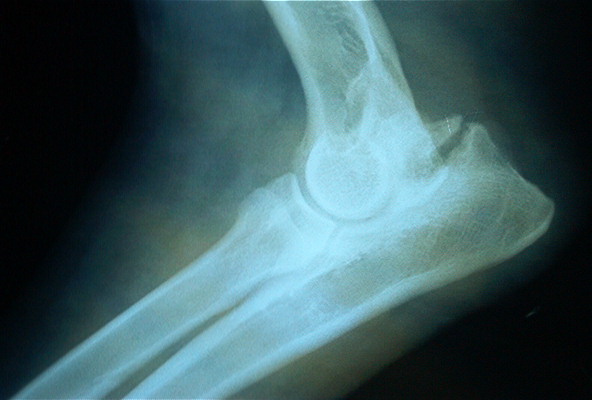
The first symptoms may occur at 4-5 months when the dog shows exercise intolerance, lameness when starting a movement or after prolonged exercise. There are dogs that do not show signs of affection in the elbow until advanced ages where the process of osteoarthritis is very evolved. Others manage to maintain a normal degree of activity throughout their lives.

The fact of making a premature radiological diagnosis makes it possible to establish an adequate treatment and avoids the formation of osteoarthritis that produces pain and functional limitation of the elbow throughout the life of the animal. The diagnosis can be complemented with diagnostic tests such as CT or MRI

The evolution depends on the degree and type of injury, but it is usually unfavorable without surgery. Surgical treatment is good if degenerative changes in the joint have not yet occurred. In any case it is necessary to perform a good rehabilitation in order to:

  • Speed up the recovery process
  • Eliminate pain and inflammation
  • Decrease lameness
  • Maintain and/or improve range of motion
  • Maintain muscle tone, mass and strength
  • Minimize or slow down the effects of joint degeneration – osteoarthritis
  • Avoid compensation at the level of the neck, spine and extremities
  • Give the maximum capacities so that the animal is functional and that it, with a good quality of life

Physiotherapy treatment varies depending on the animal and the state of the lesion. It is important to start as soon as possible with the treatment so that it is effective and, to avoid drying them as reduced mobility and / or chronic pain.

The animal goes through different phases until its full recovery. It is essential to gradually achieve the objectives set. The recovery process is terminated when the animal is able to perform daily activities.

During the first three days after the intervention, it is important to act on inflammation and pain and prevent muscle atrophy and decrease in the joint arch from appearing. For this, passive techniques are used that reduce inflammation, produce analgesia and help maintain tone, mass and the arc of mobility. Among these techniques there are electrotherapy (segmental TENS and muscle electrostimulation), massage, passive mobilizations and cryotherapy (cold).

In older dogs or dogs that have not been intervened, the objectives will be the same as in animals that have gone through an intervention. It is important to eliminate pain because, with pain you can not work.

It is important from the beginning to massage and move the affected elbow as long as there is no veterinary contraindication and, respecting in the case of fixation, the period of healing and union of the fixed parts. Massaging and moving the affected area and limb helps maintain mobility, prevents loss of mass and tone and works the proprioceptors.


A gentle mobilization combined with different massage techniques help decrease inflammation and reduce pain.

With TENSat the segmental level we can produce analgesia and decrease the amount of drugs administered. There are animals that have intolerance to certain drugs that produce analgesia and with TENS the pain can be reduced. TenS can also be used directly on the injured or operated area, as long as there is no osteosynthesis material underneath, since an internal burn could occur.

Muscle electrostimulationhelps prevent the onset of atrophy and maintain muscle mass and tone. With electrical stimuli we can stimulate nerve conduction.

At the beginning and end of the session the coldis used since it has properties that act on the decrease of the inflammatory response, edema and pain.

From the fourth day and during the next two weeks when the inflammation and pain have disappeared it is time to introduce simple active exercises such as shaking hands or small walks on a leash to force the animal to make an equal support with the four limbs and thus, prevent a decompensation between limbs from appearing due to not having a correct support on the ground. The walks is an exercise that increases the duration until full recovery.

Once the stitches have been removed, the animal can be introduced into the water. The advantages of water are used to improve recovery. Hydrotherapy (underwater treadmill) facilitates the station of the animal without loss of balance and, thanks to flotation, without having to support all its weight. In addition, flotation allows animals with bone pain and low muscle mass to work. The pressure of the water exerted on the body of the animal increases the sensitivity and decreases inflammations and edemas. The work in the water, underwater tapes or swimming increases as the animal recovers. In addition, with water, we can recover the motor pattern, increase mass, tone and strength, work on respiratory capacity and maintain and / or improve mobility.

Once the acute phase has passed 48-72 hours and without risk of infection or inflammation, heat can be introduced that helps to elastify the tissues, decreases pain and increases vascularization among others.

The use of boards, plates, balls and trampolines are important to work on balance, proprioception and above all the integration of the affected limb.

It is already in the last phase, from two weeks, when the dog has integrated the gait pattern, exercises are performed to improve the quality of movement. They are more complex active exercises to integrate the affected limb or limbs. With active and proprioception exercises it is possible to increase muscle tone, mass and strength; coordination and balance and range of motion are worked on. Rails with different surfaces, cones, bars, circuits, up and down stairs and ramps (staircase with inclined plane) are used.

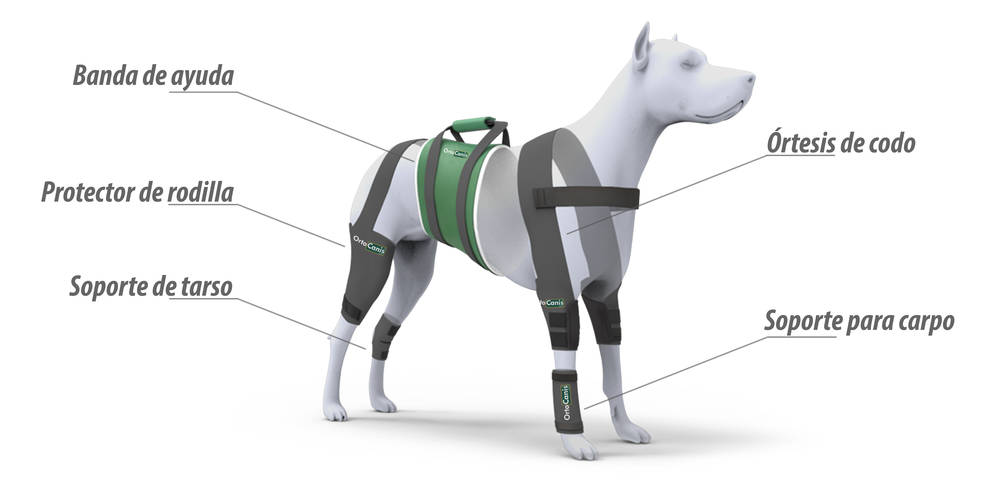
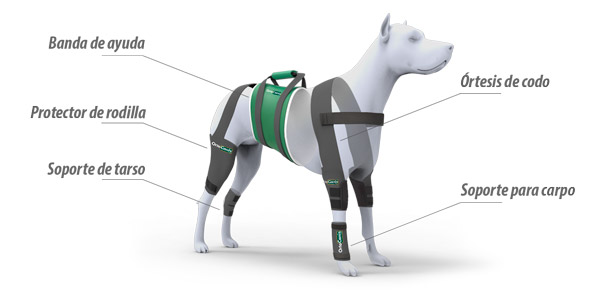
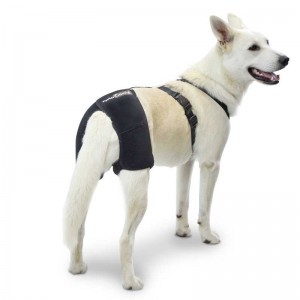
Throughout the recovery treatment and in animals with developed osteoarthritis it is essential to reduce the weight on the joints of the elbows. For this purpose , special support harnesses for elbows are used. In addition to decreasing weight, pain is reduced and does not hinder movement, the animal feels more comfortable; the joint is protected at all times from chafing and blows and helps maintain the heat that the animal gives off, which leads to a relief of the affected area.

At home, special care should be taken for animals suffering from elbow conditions. This care is necessary during and after treatment:

  • Avoid slippery floors
  • Avoid ramps and stairs at the beginning of treatment in operated animals and in animals that do conservative treatment. Once rehabilitated, ramps can be used to help get on the sofa and the car, since it is recommended that they do not do it alone, there could be a recidivism.
  • It is recommended that they rest on soft and clean surfaces, but that they are firm enough to help the incorporation of the animal thermal mattress for dogs
  • Keep skin clean and dry skin
  • Use special plates at your height so as not to strain the elbow joints
  • Correct diet and weight control. Being overweight harms the joints and generates more pain for the animal

It is very important to create an exercise routine and environment to help keep the animal comfortable and with quality of life.

Orthocanis Team

1. What is hip dysplasia?

It is one of the most frequent diseases in dogs, especially large breeds.

2. What is the disease?

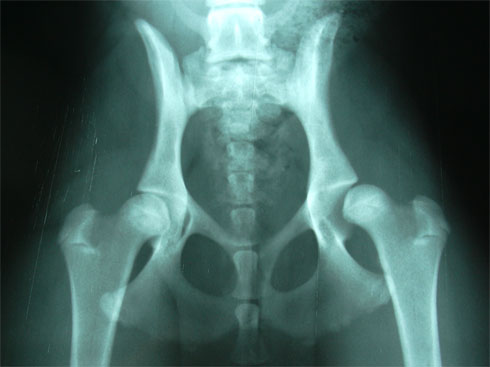
In a mismatch between the head of the femur and the acetabulum, that is, a bad gear of the hip joint. The femoral head is partially outside the acetabulum and the hip cannot work properly.

3. Does it affect some races more than others?

Yes, hip dysplasia practically does not exist in Greyhounds and yet it is very common in San Bernardo and Mastines. It is also quite common in the German Shepherd, the Golden Retriever and the Rottweiler among other breeds.

4. How to know the severity of dysplasia?

There are several degrees of dysplasia, but there are also different ways to measure it, the most common being an X-ray that should be done on dogs near the year of life. This x-ray must be performed in a very specific position and with the muscles relaxed, so it is usually necessary to anesthetize the dog.

5. What are the symptoms?

Normally lameness in dogs from 5 to 10 months but can remain without problems during youth and adulthood and debut with major problems in the geriatric period. Movement to the sides of the hips may also be indicative of hip dysplasia.

6. Does it have anything to do with osteoarthritis?

They are two different problems, but hip dysplasia, the mismatch of the joint, can cause over time that this joint degenerates and ends up suffering from osteoarthritis in the hip. Osteoarthritis is what hurts, especially in old age. Dysplasia may be more responsible for the dog’s development of osteoarthritis.

7. Is there treatment?

There are several treatments, various surgeries before the year of life and other methods such as hip prosthesis when the dog is older and has finished growing.

We also have palliative treatments such as anti-inflammatories or cartilage protectors (chondroprotectors). In very serious cases you can put a canine wheelchair and the dog continues to walk but without bearing the burden of its weight.

Ortocanis.com Technical Team

Electrostimulation for muscle potentiation

Electrostimulation is a very useful tool to enhance the muscles of a dog that has suffered an injury or surgical intervention and as a result has muscle atrophy.

We can use electric current to stimulate the muscles, enhance it and make it work, it is specifically indicated in cases of muscle atrophy, and especially in cases where the dog can not do active work. If the dog can do active work, electrotherapy will be a support, never the main source of work.

Form of the impulse that we will use will be the Rectangular, symmetrical biphasic the main authors indicate it: Thepaut Mathieu 1992, Kramer 1984, Bircan 2002

pack-tens-para-perros

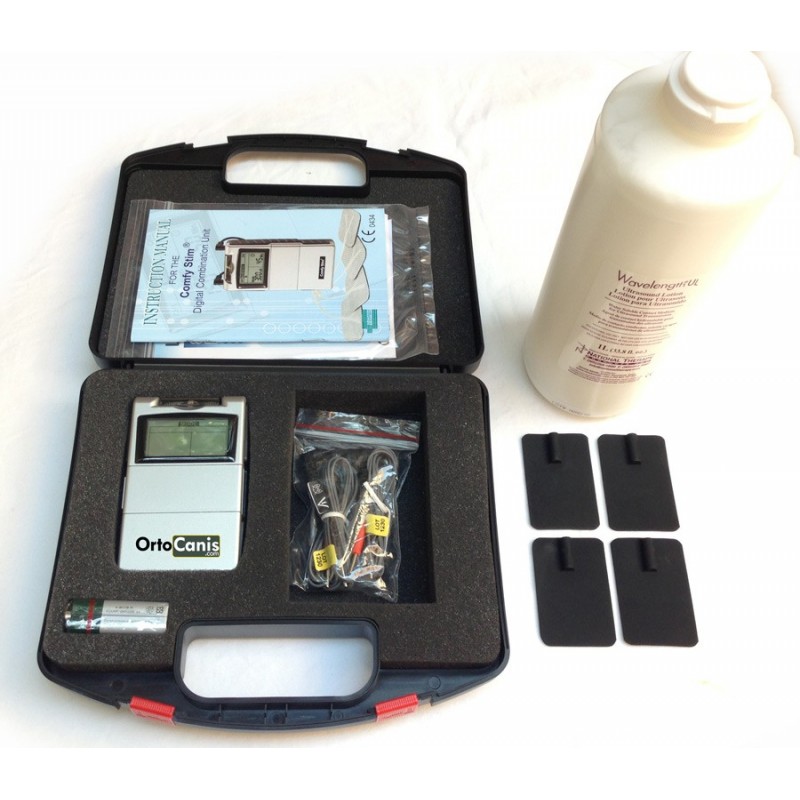
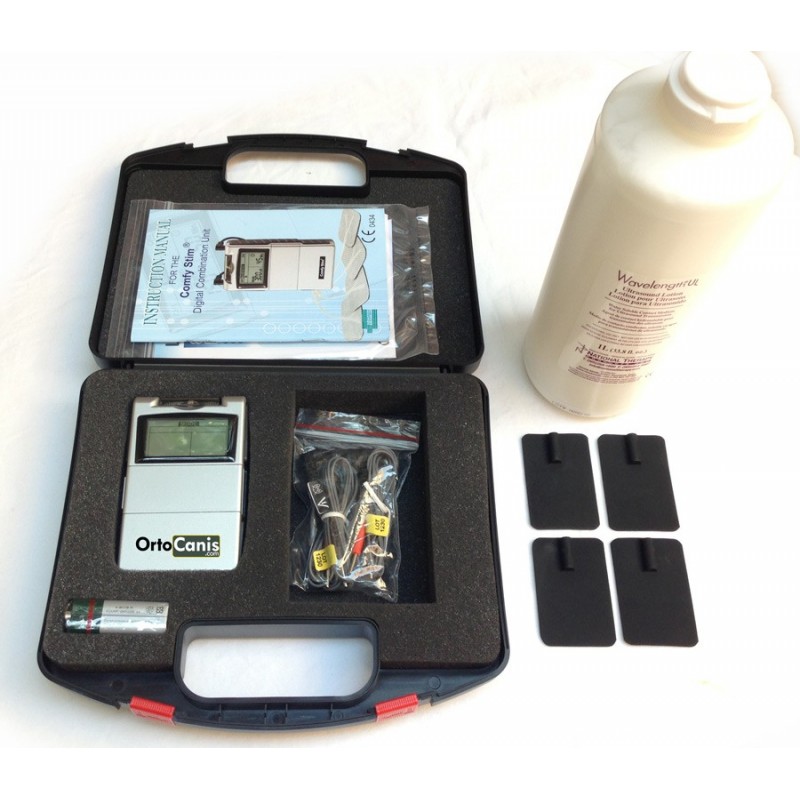
Human electrostimulation apartments can be adapted to electrostimulate dogs without too many problems, but we must ensure that we can vary the frequencies, and especially the amplitudes of the electrical impulse to adapt well to the characteristics of the dog.
There are no good studies of Cronaxia in dogs, the approximate values are 0.3 human, 0.2 Horses and in dogs by studies of less depth intuit similar values;
Sawaya – Meallier 2006, Brodart 1998, Coarasa 1999, Ramon 2007
The Intensity according to Hultaman 1983, and Ogino 2002 should be elevated with visible contraction, without reaching the limit of pain but discomfort. The dog must comfortably withstand the session but the muscles must work intensely.

The frequency will be marked according to the objective, various authors validate this option: Pougheon 1992, Busko 1989, Vanderthommen 2002.

Objective Frequency Treatment time Standby time
Relaxation: 5 Hz Continuous 0
Heating: 5 Hz Continuous 0
“Endurance”: 10-20 Hz 9 2
Atrophy: 33 Hz 6 6
Strength: 50- 100 Hz 5 25
Explosive force: 100-200 Hz 3 30

The parameters may vary slightly according to individual cases.
Rest time can be adjusted if it is active, it is advisable to use ramps before strong muscle contraction.
The intensity should always be the maximum with relative comfort.
Total time between 10 and 30 minutes depending on the phase of the injury, fatigue the muscles excessively does not help to enhance the muscles correctly.

It is important to have a device that meets all the requirements, if it is going to be used by a canine rehabilitation center or veterinary hospital, a more professional desktop apartment is recommended and with it we can use specific programs for each of our patients.

The use of rubber electrodes and contact gel is equally recommended in animals with hair.


Orthocanis Veterinary Team

Baner silla 728x90

Osteoarthritis is the most frequent health problem in dogs and also in cats of a certain age. 20% of dogs over one year old suffer from joint disorders; more than 95% of cases occur in dogs aged five years or older.

Lameness is the main cause of consultation with the veterinarian of dogs with osteoarthritis, immobility, refusal to take walks, difficulties getting up, persistent lameness, stiffness when waking up and chronic pain are other common signs. It may develop gradually or appear suddenly following minor trauma or excessive exercise.

perro-multimedia-600x300_6The pain is due to the loss of thickness and quality of the articular cartilage, it degenerates to produce the practical disappearance of the same, inflammation of the joint capsule and osseous reaction (osteophytes).
Chondroprotectors are food supplements that promote hydration and nutrition of articular cartilage.

The composition of the most common chondroprotectors is Glucosamine, hyaluronic acid and chondroitnin sulfate.

soporte para perro con displasia de cadera

Glucosamine increases the synthesis of matrix components by chondrocytes. The synergistic action of Chondroitin sulfate and Glucosamine enhances the effect to this chondroprotector.

Hyaluronic Acid contributes to the correct maintenance of synovial fluid, essential to recover joint mobility.

Chondroitin Sulfate is one of the main constituent elements of cartilage, together with proteoglycan, gives cartilage mechanical and elastic properties, contributes to a correct hydration of cartilage.

Vitamin E prevents against the appearance of osteochondral disorders and limits the formation of free radicals associated with arthropathy.

Chondroprotectors, being a natural product present in the body, does not produce adverse effects. It is not a medicine, therefore it is not necessary a prescription nor is it necessarily sold in pharmacies. Unlike other treatments, it can be given for prolonged periods of time without harming the body.

We can administer it both in dogs of breeds with special incidence of hip dysplasia during their growth and in older dogs that already have problems.

Administration in dogs during the growth period can be started from 3 months of age of the animal until the growth period is completed (around 8 to 10 months of age depending on the breed)

There are several chondroprotectors on the market, in Ortocanis we have made a selection of the best chondroprotectors looking for quality and effectiveness of the active ingredients.

Ortocanis technical team

Baner silla 728x90

Cold is one of the most used elements for the treatment and prevention of muscle pain and joint or soft tissue inflammations.

After surgery or in cases of soft tissue injuries such as tendonitis or muscle injuries, the application of cold reduces pain, prevents the formation of excess inflammation and helps resolve it if it has appeared.

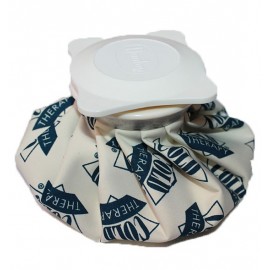
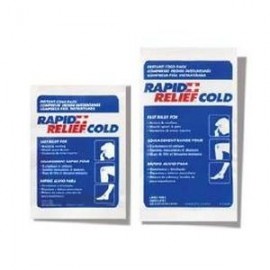
bolsas-de-agua-caliente-o-hieloThere are several studies that talk about the effectiveness of the use of cryotherapy in its different aspects, application of ice, single-use bags of instant cold , cold pack, neoprene devices for use with cold packs or crushed ice, immersion in cold water with ice cubes …

All of them have their advantages and disadvantages.

Techniques that use ice directly, or immersion in cold water have the problem of wetting the skin of the animal and transmitting too much moisture to the body of the animal, in addition the ice water that is just touching the skin of the animal can produce burns and irritations, in human it is always recommended to put a cloth between the skin of the patient and the ice.

Sometimes, in dogs we think that their own coat is enough, but we can have problems with the water, very cold, which is just touching the dog’s skin. Therefore it is better to avoid this direct contact.

There are very expensive “dry ice” equipment that are machines that emit very cold air and are used in human rehabilitation centers, especially in sports centers, they clearly lower the temperature of the tissue if they wet the skin and without creating moisture or irritation. The dog’s hair can be an impediment to the penetration of the cold of this type of devices, this factor together with the high price make this technique practically not used in dogs.

The fastening system is another important factor; exist in the marketbolsa-de-frio-instantaneovery well designed restraint systems that allow the dog up to a certain mobility without the ice falling, it is extremely advisable to use straps or other more evolved fastening systems since this way we ensure the intimate contact of the ice with the dog’s skin and that this contact will last as long as the treatment lasts.

The estimated treatment time should be between 15 and 20 minutes, the most recent studies recommend these times since they are the ones that allow to maintain for a certain time a more or less deep tissue, such as a joint capsule of the knee at a temperature considered therapeutic of 15ºC. Precisely the knee is one of the joints where more ice can be used as a treatment system and a Device that fixes the ice well to the knee can help us a lot to be more effective. If the internal tissue does not fall to 15ºC we are not taking advantage of the possibilities of cryotherapy.

The latest novelty in cryotherapy treatment is to agree with compression and the latest evolution of compression is that it is alternating. There is only one machine on the market that provides these two components, cryotherapy and intermittent compression in a single device, the cold and compression system.

Ortocanis technical team

Baner silla 728x90