
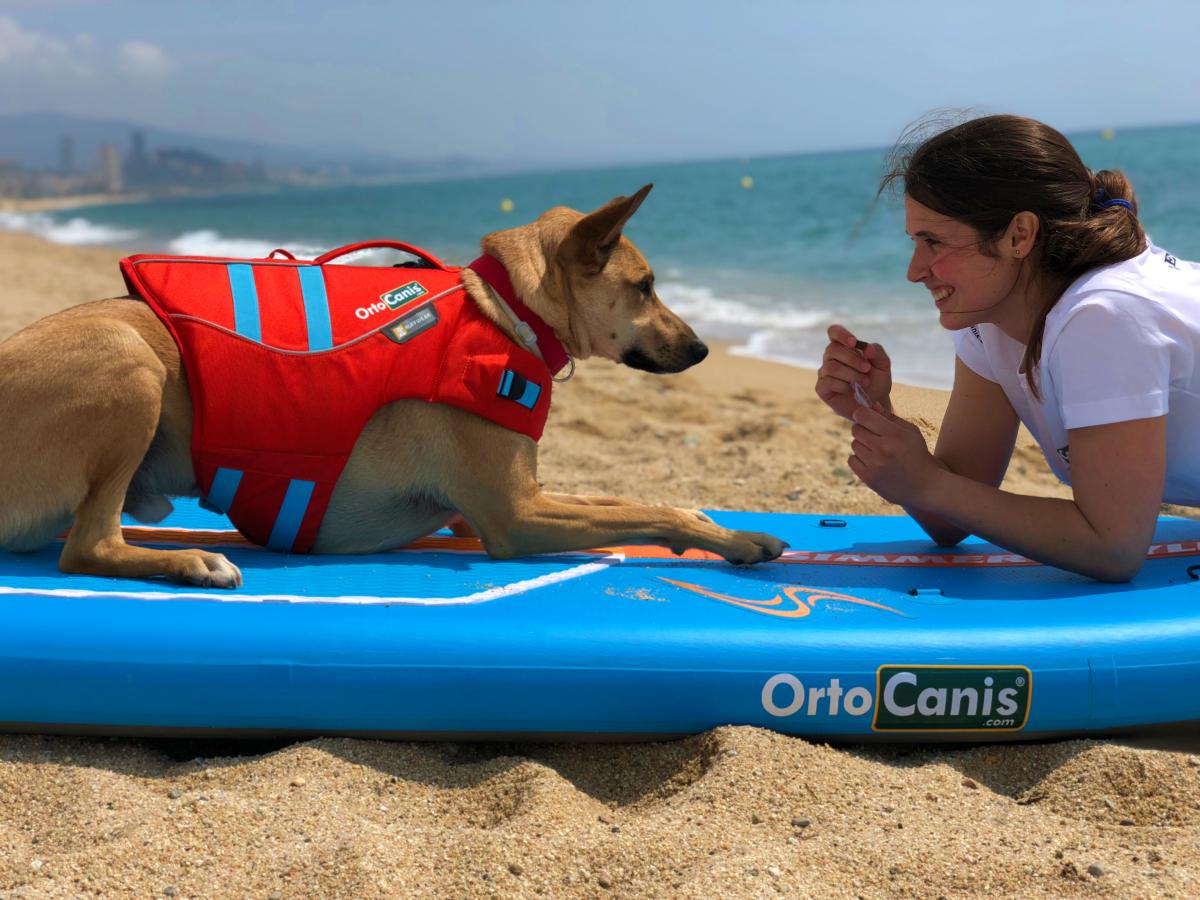
Has your veterinarian recommended that your dog swim?
Hydrotherapy, or water therapy, has benefits for certain body ailments and helps to maintain the good health of your pet.
Through the use of water, ailments that your animal suffers from, such as arthritis, neurological problems, muscle pain, excess weight, etc., can be alleviated.
These pathologies, in the long run, can negatively impact the progress of the dog's health. In addition, many ethologists and dog trainers recommend it as a therapy for nervous and hyperactive dogs because it noticeably relaxes them.
The benefits that hydrotherapy provides us are many:
- Relief of pain, stiffness, and swelling.

- Strengthening of the muscles.
- Relief of muscle spasms.
- Improves the range of motion of the joints.
- Increases circulation.
- Improves cardio-respiratory endurance (improves exercise tolerance).
- Thanks to the phenomenon of flotation that occurs, it helps to move and re-educate the gait in animals with great difficulty or inability to walk and move on dry land (severe arthritis, neurological operations, fractures…)
Hydrotherapy can be used in both acute and chronic cases and, depending on the animal's condition and its ailment, the number of sessions, duration, and intensity of therapy are varied.
Water therapy can be done through:
- Sea or pools (the animal can perform any type of exercise).
- Underwater tapes (essential for re-educating locomotion disorders).
- Jacuzzi (which gives a massage and relaxation effect).
- Contrast baths (to treat circulatory problems).
Hydrotherapy is beneficial for your dog's care as long as it is accompanied by a healthy diet and exercise. In the case of animals with pathologies, it accelerates the process of recovery and maintenance. In severe conditions of: kidneys, liver, heart, respiratory, skin, cancer, etc., this therapy is not recommended and it is advisable to consult with your veterinarian.
dog physiotherapist graduated from the University of Tennessee
Collaborator of Ortocanis