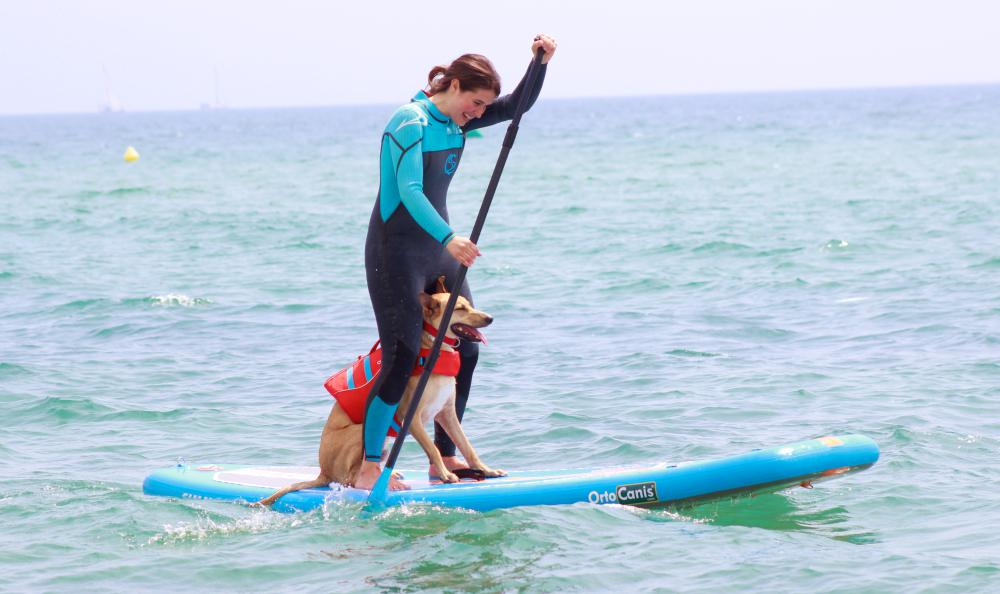
Nowadays, most sea lovers have dogs and many times we do not know what to do with them during our visits to the beach. Our four-legged friends are always happy when we get home and are excited to share moments with us so why couldn’t we introduce them to paddle surfing?

paddle surf perro

The mere fact of sharing an activity with them not only tires them and motivates them to work but also creates a bond with us in which we can gain a lot of trust with our dog.

Our preparation

Before we begin, we must keep in mind what our objective is. In our case it is to get us to enjoy a walk through calm waters with our dog. This is going to take an effort and not every day we will leave our training as happy.

Some dogs love water and have no fear of the waves, others their total trust with the owner leads them to do unthinkable things like jump off a wall and wait for the owner to catch them when they fall. Now, we will put ourselves in the most critical situation, train a dog that does not like to swim and even less face unpredictable situations, as is the case with Nik.

So starting from the previous premises we must keep in mind that for our dog this activity must be fun and therefore can never lead to a punishment, there must always be a prize. This will motivate them and strengthen the desire to be able to share a good paddle surf ride with their owner.

It is important to start working on two aspects: the first is the motivation to interact with water, we must get familiar with this medium, for example, in lakes or rivers where there are no waves. There we can run next to him along the shore or throw a doll at him to go find him. And the second, start working with the paddle board on the ground.

Starting on land
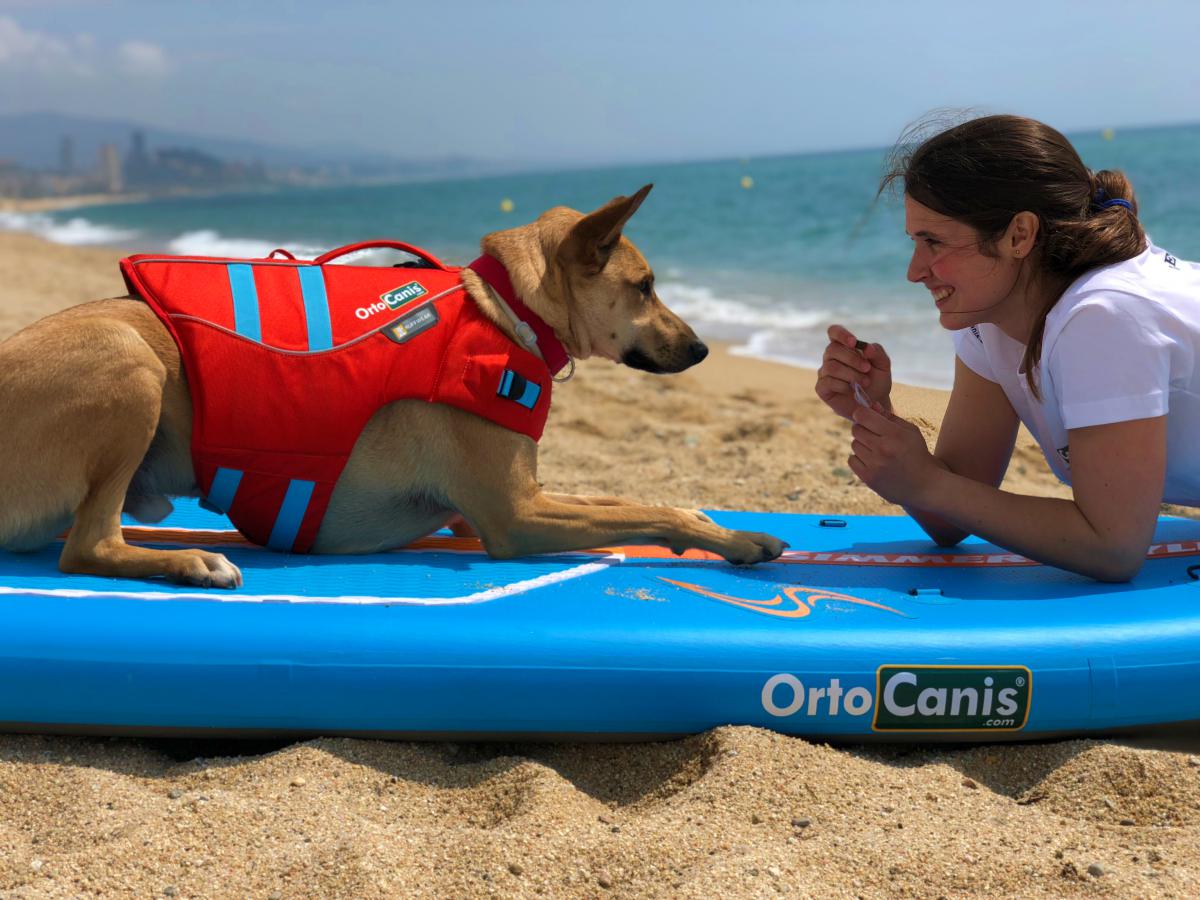
Paddle Surf con perrosThe idea of starting working with the board on the ground is so that our dog gradually feels safe in it and gains confidence, in such a way that we will use positive reinforcement. The more positive experiences our dog has with the board on land, the safer he will feel when this activity becomes a greater challenge for him.

First we can leave the board on the ground and let the dog experiment and explore. After a while, we can put some candy or toy on top to motivate you to get even closer and go up. Just at the moment he climbs above the table we must reward him in such a way that he will understand that we are happy and he gets a prize when he performs this action.

When we observe that our dog already climbs confidently we can introduce certain orders, either to indicate that he goes up or down as well as to sit or lie on top of the board, since this is what we will need once we are in the water. Little by little we must begin to get behind him while he is sitting or lying down and we can demand that he be for a longer period of time in that position.

Our last step before going to the water is to familiarize you with a dog lifeguard armour out of the water. The dog must associate that the board and the armilla go together so we will continue working the previous orders with the armilla on.

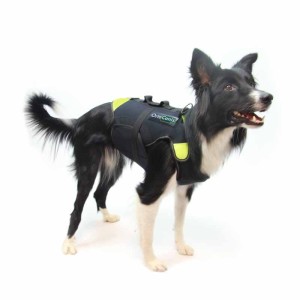
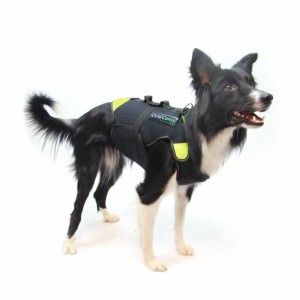
At this point many of you will wonder why use a armilla for the dog. First of all, we must keep in mind that if we want to go out into the water we can fall and we must be able to ensure the life of our friend, in such a way that it will help us whether it is hit or if we want to climb it back on the board. Many of the armillas they sell have a handle to be able to take the dog, so we can climb it easily.

Let’s go to the water

First of all it is important that we master paddle surfing before riding our dog. When we have this consolidated, it is time to look for a lake or a river with calm water to take you in your first days.

Before getting directly in the water it is important that we work a little on the routine created on the ground so that the dog gets used to the change and the new environment. Later we can make our first steps in the water:

Step 1: Get the dog to climb on top: For this we will place the board well taken near the shore and we will keep it as still as possible, we will give the order to climb on top of it and we will reward at the time of riding since it will swing. We will continue to reward as the dog is on top of the board (it does not need to be with all four legs) and little by little we will ask him to be all on the board. If you are calm we can move the board slowly. Finally, we will give the order to come down from it and at that time we will reward you with great enthusiasm since you have achieved a great achievement.

Step 2: Get the two of us on top of the table: To get it we will sit in the center of the table, we will give the order to go up and then the order to sit down. Later we can paddle as if we were taking a kayak or if we are two people, one can climb in the back and walk while we continue working on the safety of the dog.

If we both feel safe, with very soft and slow movements we can get on our knees and continue to surround our dog that is sitting. Our last step will be to stand on top of the board with the dog sitting between our legs. If we are alone we must continue very gently but if we have help we can get up and invite the dog to climb while our partner holds the board.

At all times, patience and calm. Our dog will indicate when he is ready for the next step and in this way we can face challenges with him. If we enjoy and they enjoy each time we can introduce you to new environments and little by little we will share more activities at sea with our friends, such as surfing a wave.

Aida Macià – Sailboards Girona – OrtocanisBaner silla 728x90

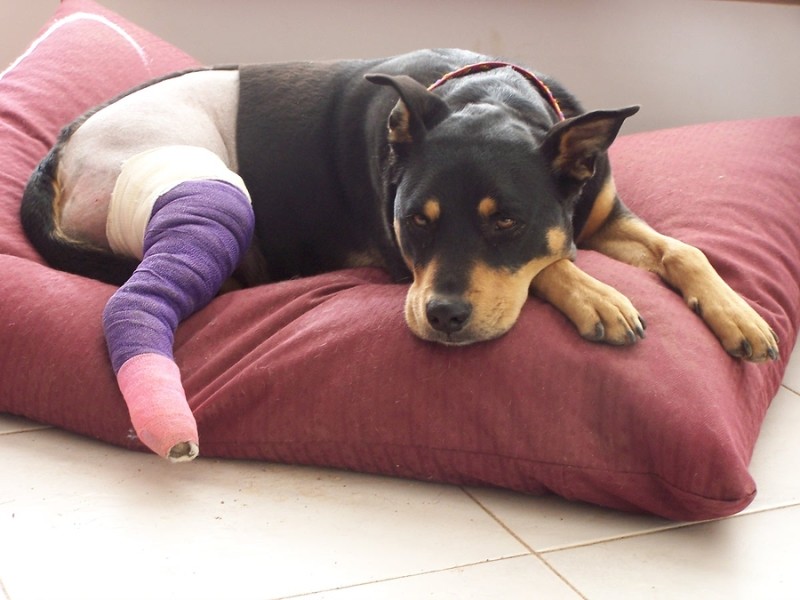
If your pet has an injury and you want to speed up his recovery, you may be interested in rehabilitation for dogs. Today we tell you everything you need to know about these treatments.

There is nothing worse than watching our best friend suffer. An injured dog is more inactive than usual. You can see the pain in the movements, how he wants to run and jump as always and the sadness that produces him not being able to do it. In those moments, you would do anything to help him get back to being healthy. Have you considered rehabilitation for dogs?

Todo lo que necesitas saber sobre la rehabilitación para perros

What is rehabilitation for dogs?

As with humans, rehabilitation for dogs consists of a series of exercises and treatments coordinated with a professional physiotherapist. These treatments are designed to relieve the pain of the injury, accelerate recovery and give guidelines and exercises to strengthen the affected part to recover normality. There are several types of rehabilitation therapy for dogs. Some are heat therapies, massages, exercises with pilates equipment, with circuits … Are you surprised? Rehabilitation treatments for dogs are very similar to those for humans. Because, after all, we are not so different from our four-legged friends.

What is rehabilitation for dogs?

You may be wondering, “Okay, that sounds good, I want my dog to recover as soon as possible. But does rehabilitation for dogs really work? What can a therapist offer my pet?” Well, you should know that rehabilitation for dogs has many benefits for your best friend.

  • Decreased pain. Thanks to massages and therapies such as heat, the muscles and bones of dogs are relieved and relaxed. In this way, dogs with ailments such as a herniated disc or other injuries can begin to strengthen their damaged parts again thanks to an activity that will no longer be so painful.
  • Delayed atrophy. The immobility of an injury ends up causing other associated problems, such as atrophy or weight gain. With dog rehabilitation you will keep your pet moving and fit. As soon as that injury heals, he will be ready to run again.
  • Re-education of the movement. Some physical or mental injuries seriously damage the mobility of our pets. Rehabilitation for dogs can activate damaged muscles, regain balance and improve coordination. There have even been cases of dogs with reduced mobility for, for example, neurological injuries that, with a lot of work and affection from their owner and the therapist, have been able to return to being independent and active.

As you can see, there are multiple benefits of rehabilitation for dogs. With the help of a professional therapist, you will be able to greatly improve your pet’s quality of life. Don’t let that injury stop him from leading a happy and active life. If your dog is suffering the aftermath of an injury, don’t hesitate. Contact a center specialized in rehabilitation for dogs and take care of your health from today.

Have you ever seen someone walking a dog carrying it in a therapeutic harness? Today we will explain the properties of the dog harness.

When talking about a dog harness, you’re probably thinking about that alternative restraint system to the collar. And yes, sure enough, that’s also a harness. But today we want to talk about a very special type of dog harness. Do you want to know why?

Because those harnesses allow dogs to regain their mobility. Thanks to those gadgets, our best friends can overcome injuries, speed up rehabilitation, and have all the joy of when they’re healthy. Do you want to know how?

arnes-perro-multifuncion-julius

Therapeutic dog harness: how does it work?

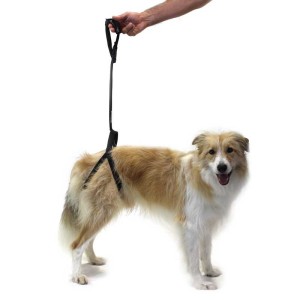
Dog harness with therapeutic properties works, so to speak, as a restraint for the dog. The owner passes under the part of the body that has damaged mobility (hind legs, front legs) so that the handles are up. In this way, a fastening effect is created. The owner carries part of the weight of the dog so that this is not an impediment.

This makes the dog feel lighter and regain some of its agility. Imagine, for example, a dog with a damaged hind leg. Every time he carries his weight, he hurts himself, so he stops exercising and in the end his whole body suffers. It is increasingly difficult for that dog to recover its good state of health.

With a dog harness for the hind legs, the owner of that dog offloads part of its own weight. That way, having nothing to pressure his injury, the dog can return to exercise the muscles without forcing it. Thanks to this, he will recover mobility much earlier and the days of the injury will be a distant memory.

Dogs that will not regain mobility

But there is another type of dog that can benefit from the dog harness: those who will never regain their mobility. Wheelchairs for dogs give them the possibility to move freely and have a dignified and relatively comfortable life, but, at the end of the day, they are linked to something that makes them uncomfortable and heavy.

arnes-de-soporte-para-perroA dog harness is a way to give you back that feeling of freedom from time to time. Thanks to the support of his sleep, the dog has the feeling of being able to run autonomously again on his four legs. You will see how your best friend is agitated with happiness by feeling free and light again to run and play for a while. A time that for him means everything.

Dogs need to move in order to lead a good life. It’s not just about the joy they feel when running and playing. Good physical activity is crucial to prevent injury, atrophy or contract diseases related to a sedentary lifestyle. A dog harness is a great way to give your pet a chance to live healthier and happier.

Dogs, due to their physical and movement particularities, are more likely to develop certain injuries throughout their lives. Read on to be aware of the most common canine injuries.

Dogs usually and should lead an active life. Movement helps them prevent obesity, sedentary lifestyle and depression. However, their physical activity and physiological particularities make our best friends end up developing certain canine injuries over time. The best way to help them is to be aware of these canine injuries and remain vigilant so that we can identify the first signs of pain or discomfort from our pets. Read on to get all the information about canine injuries you may need.

Lesiones caninas más habituales

Most common canine injuries

Although dogs have a tendency, due to the genetics of the breed to which they belong, to suffer more canine injuries than others, there are certain parts especially prone to accuse the damage of bad falls, bruises or the wear and tear of age.

Joint injuries

The joints of dogs are especially exposed to canine injuries. A bad fall when jumping or trauma (caused by hitting an obstacle, playing with another dog or for more serious issues, such as a hit-and-run) can cause different canine injuries. Examples include bone dislocations or breaks. Special mention deserves canine hip injuries. The hips of dogs suffer especially with all these traumatisms. But, in addition, age seriously wears down the hips of dogs, which can cause very painful herniated discs . Indications of these types of injuries are mobility problems and signs of pain when moving.

Muscle injuries

These canine injuries occur especially when you go from less to greater physical activity. It is one of the so-called “spring canine lesions“. This is because dogs are usually more inactive during the winter months, due to bad weather and cold, which do not invite to maintain the same rhythm of outings and physical activity. With the arrival of good weather, many dogs happily resume their activity. However, his muscles, tendons and ligaments have gone through a time of inactivity that has resented his endurance. This can lead to soft tissue trauma, as well as cervical and neck pain. Some signs of these canine injuries are stiffness and lameness.

Nail injuries

Dogs use their nails to try to dig, scratch surfaces and play with other dogs. Given their curious and exploratory nature, many dogs, especially puppies, try to dig into hard surfaces, such as cement, and end up fracturing their nails. Especially if they have not been cut regularly and are too long. These canine lesions are very painful. If you notice that your dog is limping, bleeding or licking his paws excessively, he may be suffering from these canine injuries.

You can’t stop your dog from getting injured. What you can do is be informed of the canine injuries you may suffer and be aware of the signs of pain. If you think your dog may be suffering from one of these canine injuries, take him to the vet as soon as possible. He will be able to advise you on the ailment and start the treatment so that your best friend is healthy and happy again.

Ayudas para perros con artrosis

Herniated disc in dogs is a painful disease. Many owners want to help their pets, but they don’t know how. Is this your case? Read on and find out how to help your dog with his herniated disc.

If you have a dog with many years of life or of certain specific breeds (such as beagles or poodles), your pet may have suffered a herniated disc in dogs or is at risk of suffering from it. This disease is painful and can cause problems in mobility, paralysis in certain areas of your body, lack of control of the bladder …

Many dog owners suffer from seeing their best friends in that position, but they don’t know how to help them. In this article we want to give you some tips to make the recovery of herniated disc in dogs more bearable.

Hernia discal en perros: consejos para ayudar a tu mascota

Herniated Disc in Dogs: Tips to Help Your Dog

1. When in doubt, take your pet to the vet

Hernia in dogs can occur for several reasons. Sometimes they are degenerative herniated discs produced by age. And some dogs have a genetic tendency to contract them. But sometimes they are produced by activity. A jump or a bad fall can lead to a herniated disc in dogs. If you notice any kind of limping or pain in your dog, take him to the vet. Express your doubts and ask him to do a complete check-up on the dog. Prevention can prevent your dog from annoying and painful rehabilitation and even surgery.

2. Follow the program prescribed to your dog

Herniated discs in dogs have built-in rehabilitation that includes exercises and medication. This can be a nuisance to you as a dog owner, but remember. Your dog is a loyal friend and deserves the best. Follow the guidelines that the veterinarian prescribes you and you will see how your state of health improves. Some exercises you can do are treadmill rides, stimulation, application of heat to the affected area using an infrared lamp … The veterinarian is the expert, so you should ask him any questions about the treatment that may arise.

3. Complement the treatment with alternative methods

A word of warning: an alternative treatment is an adjunct to the therapy ordered by the veterinarian. In no case replace medication or rehabilitation exercises with an alternative therapy.

However, certain techniques have been shown to help relieve pets during their recovery from a herniated disc in dogs. Animal physiotherapy or electrotherapy can help accelerate the effects of veterinary therapy and make it less unpleasant for your dog.

4. Acquire specialized equipment

Some accessories, such as dog wheelchairs, thermal coats, special feeders or ramps to help you get on the sofa or car can make it easier to rehabilitate herniated discs in dogs.

Dogs are faithful creatures that are by our side when we need it most. Give him the same treatment. Help him when he faces the pains of the herniated disc in dogs and you will see how the joy of your pet returns to the home.

If your dog has mobility problems or injuries, have you considered acquiring a wheelchair for dogs? Below we tell you the 3 benefits of acquiring a wheelchair for dogs.

You may have ever seen dogs in wheelchairs and felt some grief. Pets look small and helpless in dog wheelchairs. Their mobility is no longer the same, they can not jump and run as before and you have to adapt the house so that the dog can move comfortably.

However, for the dog a wheelchair is not a punishment. Quite the contrary. Think of it this way: the dog wheelchair is a device that allows animals that can no longer move comfortably to overcome pain and physical impairments and live a life as full and happy as possible.

If you think your pet needs a wheelchair for dogs and you suffer at the thought of acquiring one, don’t worry anymore. Today we want to tell you the 3 benefits of wheelchairs for dogs. Improve your pet’s life today and enjoy many years of joy with it.

{%ALT_TEXT%}

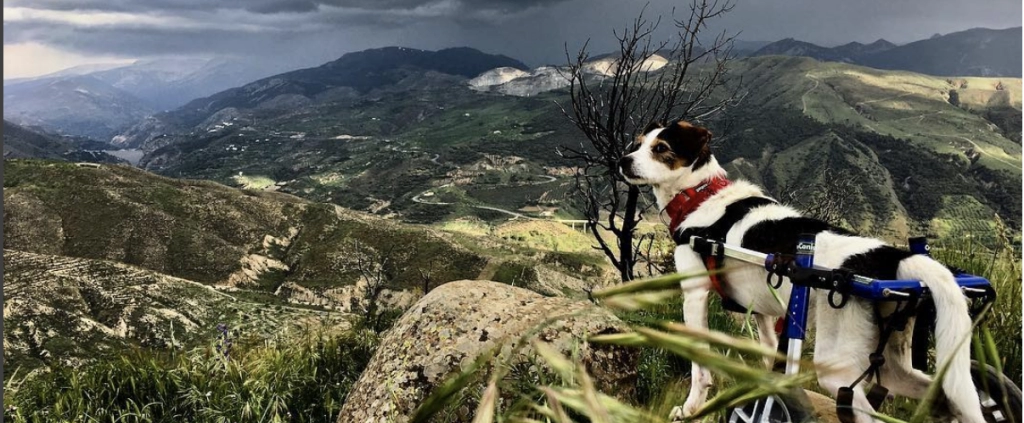
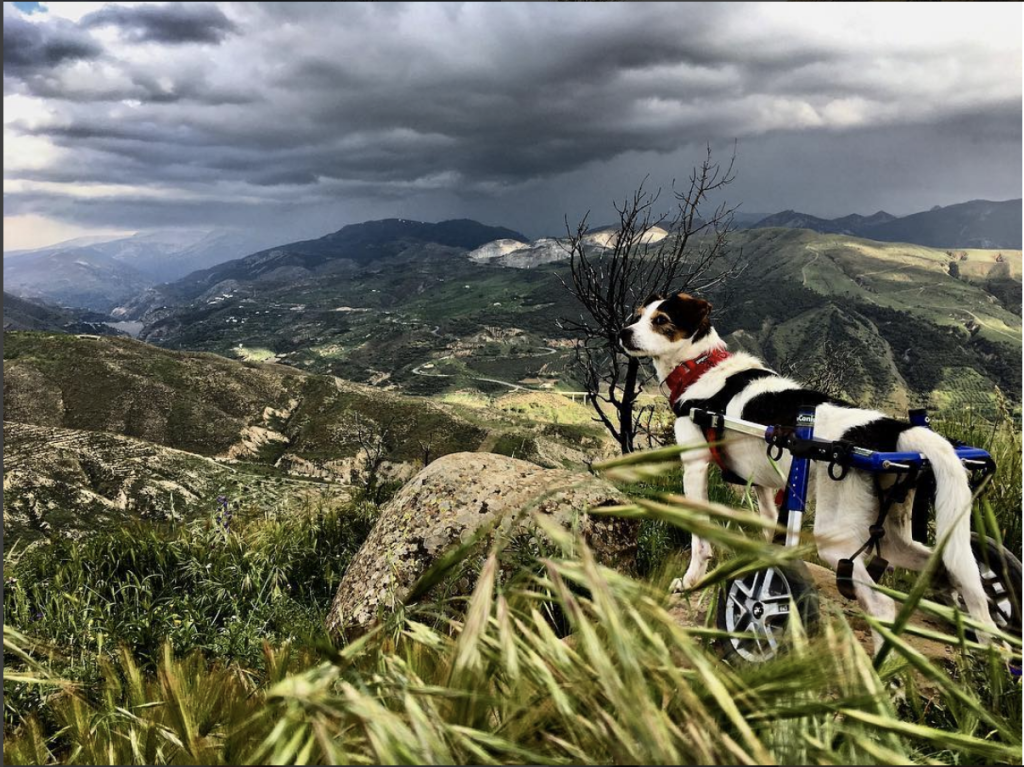
@happysevilla with your self-adjusting dog wheelchair

The 3 Benefits of Acquiring a Dog Wheelchair

1. Avoid pain

Imagine that your dog has an injury to one of his hind legs that makes him limp. The dog wheelchair allows you to run again and enjoy walks and socialize with other dogs without pain. Also, since you will no longer strain the injured dog’s paw, it will speed up your recovery. Before you know it, your best friend will be back in top form pulling on the leash when you take him out for a ride.

2. Regain mobility

Some dogs, especially older ones or those with a genetic tendency, suffer from herniated discs in dogs. One of the symptoms is loss of mobility and paralysis of some parts of the dog. This prevents them from leading a healthy and happy life. Wheelchairs for dogs allow them to dodge this impediment and return to enjoy all the fun of walks and socializing with other dogs. As with humans, the dog wheelchair can make your pet regain its independence and avoid the obstacles of poor mobility.

3. They are adaptable

Dog wheelchairs can adapt to different sizes, your dog’s needs and almost all terrains. Your dog will not have to give up the beach or the mountain and will be able to continue carrying the same train of life as before the injury.

The wheelchair for dogs is a complement that they do not lock in metal bundles. On the contrary. It allows them to run again and lead healthy, full lives, away from the sedentary lifestyle and unhappiness they would have without them. Do not think twice and acquire for your dog a wheelchair with which he can return to play and be happy.

Osteoarthritis in dogs: the most appropriate treatments to relieve it

Dogs can also suffer from osteoarthritis as they get older. Just like humans. This disease, caused by wear and tear on the cartilage of the limbs of animals, causes them a lot of suffering. Luckily,
osteoarthritis in dogs
can be treated.

Thus, among its symptoms are pains, lameness of the affected limb or stiffness. Also difficulty moving and climbing stairs. And even experience a loss of mass in the muscles, and an abnormal decrease in your appetite.

Obviously, the sooner the symptoms of osteoarthritis are detected in a dog, the sooner the most appropriate treatment can be applied. As we will see below, it will be different depending on its severity.

Osteoarthritis in dogs: the most appropriate treatments to relieve it

Treatment for osteoarthritis in dogs

The first thing to do before a dog affected by osteoarthritis is several changes in its routine. All with the aim of getting the animal to have the least problems and the greatest possible autonomy. For example, if you regularly rest in a house with several floors, change your sleeping cushion to a plant where you do not have to climb stairs.

It will also be necessary to inevitably follow the instructions of the veterinarian. He will probably suggest giving the dog a treatment based on anti-inflammatories. In addition, it is likely to suggest that the animal take a compound with vitamins and minerals, in addition to collagen. With this type of compounds, what the veterinarian intends is that the cartilage stops its wear. Also prevent it from deforming.

However, we must not ignore the fact that osteoarthritis is a chronic degenerative disease. It is necessary to avoid as much as possible that the animal has pains, for which other measures can be taken. Among them, monitor your weight and prevent you from gaining excess weight. You also have to make sure that there are many fatty acids in your diet. This favors the elasticity of the joints.

You also have to make sure that the dog does light exercise. Of course, adapted to your possibilities. For example, try to take walks, but prevent it from running. On the other hand, since extreme temperatures are not suitable for osteoarthritis, you have to protect yourself from them. Thus, it is necessary to avoid exposing it to both extreme cold and excessive heat.

In very severe cases of osteoarthritis, dogs may need to replace their affected joints with prostheses. Exactly the same as what happens in older people with age-related degenerative diseases. But that is only appropriate if the situation is already very serious. Or if the veterinarian so advises. Meanwhile, they can be helped with palliative treatments. Or with protectors that provide stability.

How to Manage Osteoarthritis in Older Dogs

Osteoarthritis in older dogs is a condition that significantly affects the quality of life of our pets. This degenerative joint disease can cause pain and reduce mobility, but, with proper management, it is possible to relieve its symptoms and improve the well-being of our canine friends.

Early Identification: Recognizing the signs of osteoarthritis is crucial. If your dog shows reluctance to move, stiffness when getting up, or decreased activity, it’s time to consult your vet.

Available Treatments: There are several options for managing osteoarthritis, including anti-inflammatory medications, joint supplements, and physical therapies. A comprehensive approach is often the most effective.

Home Changes: Small modifications to the home can make a big difference. Provide a comfortable bed, prevent your dog from jumping to heights, and consider using ramps if necessary.

Importance of Diet and Exercise: Maintaining a healthy weight is essential to reduce the load on the affected joints. Low-impact exercises such as short walks can help maintain mobility without putting stress on the joints.

Protectors for limbs affected by osteoarthritis

In case osteoarthritis causes enough discomfort to the dog, it is advisable to protect the limbs that are affected. For this, protectors suitable for both the animal and the disease can be used.

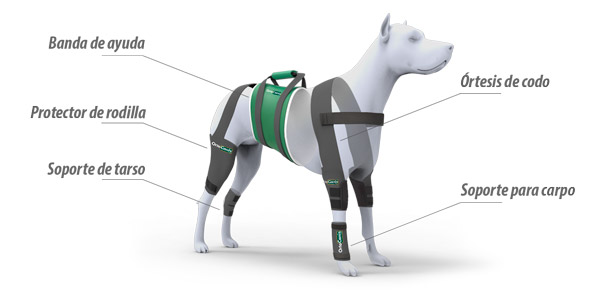
For example, knee protectors for dogs. Or, if the animal is already very old and suffers from advanced hip osteoarthritis, a wheelchair can help it maintain mobility. Even a suitable harness, with which dogs with mobility problems in the hind legs can achieve more stability.

perro-multimedia-600x300_6

Surely we have ever wondered if our dog understands us when we talk to him. In recent years, studies from journals such as Science1 or Proceding of the Royal Society B2 have shown that these animals are capable of understanding human communication.

In this sense, the brain of our best friend works in a very similar way to ours when it comes to language; since its left hemisphere serves to understand the words we say, while with the right it can differentiate the intonation that we are using.

ortocanis_perro_entiende_hablamos

Keep in mind that dogs are able to memorize specific and important words for them, that is why when we address our dogs we usually use short and precise phrases. Also, previously we must perform a fundamental work with our dog since we must help him memorize the main words, and that requires our attention, patience and affection.

Another key element in communication with our dog is intonation, using a high-pitched tone of voice will help him pay more attention to what we are telling him. Also, we can not always speak with the same tone of voice, and for this it will be important to remember that we have to speak with a soft tone, since we want to show affection and love for our dog. Even if we are angry with him because he has done some mischief we must control our intonation.

We will not achieve anything by shouting at our dog, perhaps only affecting him and driving him away making him afraid of us. In addition, if he is afraid of us, it is very likely that he will begin to disobey us on a regular basis as a way of escape and rebellion.

We never have to forget that our dogs have feelings, and that they are animals that need to feel our affection. Therefore, it is essential that they can perceive all the love we feel when we speak to them.

And remember, do not despair, think that our friends understand us enough to have a relationship of complicity sometimes superior to what we can get many of our species. In addition, over time the understanding will go further. Just in case you don’t wait for machines like the one that futurologist William Higham, author of the book “The Next Big Thing” and that predicts that in ten years there will be devices that allow us to talk to our dogs, give more information than a cross of complicit glances, a hug or a simple flutter of their tail.

Source: Science1, Proceding of the Royal Society B2.

Baner silla 728x90

denuncian-chipiona-acusado-arrastrar-todoterreno_1080502371_62167747_667x375

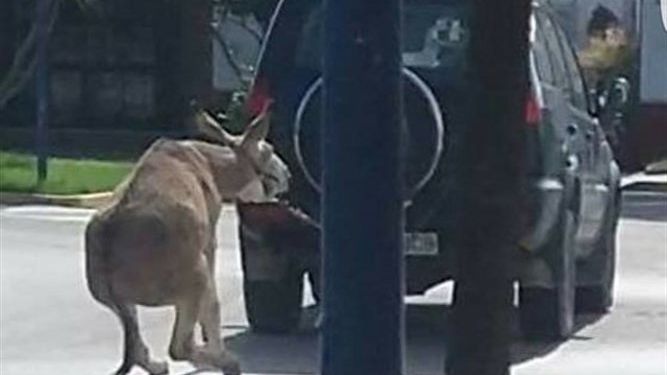
Pacma has formalized a complaint before the Subdelegation of the Government in Cádiz against a neighbor of Chipiona for animal abuse, since he would have dragged a donkey tied by the head to the tow ball of his SUV through the town, causing injuries to the animal.

In a statement, Pacma explained that the events took place around 12:40 p.m. on Granada Avenue in the town of Chipione, thus incurring the accused in an alleged crime of animal abuse typified in article four of the Law 11/2003, 24 November, on the Protection of Animals of the Junta de Andalucía.

As it has specified, this article expressly prohibits “mistreating or physically assaulting animals or subjecting them to any other practice that inflicts unjustified suffering or damage on them”.

In the graphic documentation with which Pacma accompanies his complaint it is observed that the animal is dragged by the car, which “would cause stress and damage to its legs”, stressing at this point that in the photographs can be seen on the ground “blood of the animal” due to “the rubbing of its hooves against the road”.

Finally, the complainants have reported that several pedestrians rebuked the alleged perpetrator of the events for the treatment of the animal, motivating him to get out of the vehicle and take the donkey walking.

Source: Europa Press

Ayudas para perros con artrosis

A device picks up signals from the brain and forwards them to a sensor that activates the endings responsible for controlling the muscles.


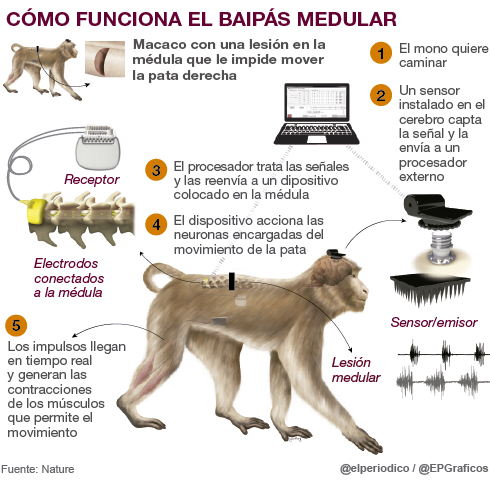
A macaque that could not move one of its hind legs because of a spinal cord injury, has managed to walk almost normally thanks to a “bypass” that wirelessly communicates the brain and the endings responsible for activating the muscles. This cerebrospinal neuroprosthesis, as defined by those responsible, has been developed at the École Polytechnique Fédérale de Lausanne, in Switzerland, in collaboration with other research centres and the company Medtronic.

The animal has a small sensor built into the brain that captures the emitted signals – from the macaque’s desire to move – and sends them to a processor. The data is treated and decoded and then forwarded to another device with electrodes that are placed in the lumbar area of the spinal cord, on the other side of the injury, and activate the neurons that direct the muscles of the affected leg. -“What we do is restore in real time and wirelessly the communication between the celebrity and the locomotor system“, says one of the authors in the project, Eduardo Martín Moraud, a Spanish engineer who works at the University of Oxford (Nuffiel College) and who had already been 5 years in the team of the Swiss School.

The details of the research, whose first satisfactory results were obtained in June 2015, have been published in the scientific journal ‘Nature’. One of the two monkeys in the experiment recovered the use of his paralyzed limb in the first week after the injury, without training, both on the treadmill and on the ground, while the second took about two weeks.

Recuperacion paralisis animal

As reported by the EPFL, a clinical study has been launched at the University Hospital of Lausanne to validate the therapeutic effects of the technology in people with spinal cord injury, but only partially. For now, what is done is to check if the placement in the marrow of a device with electrodes, previously programmed, manages to restore the movement of the legs. It does not communicate with the brain.

THE PROCESS

As the researchers explain, when the brain decides to perform a movement or any other activity, there is “a transmission of electricity peaks between neurons” that can be measured and interpreted by a mathematical algorithm. In an intact nervous system, the signals that denote walking come from a small region of the brain called the motor cortex (or motor cortex).

Subsequently, the signals travel through the spinal cord, reach the neural networks located in the lumbar region and these activate the muscles of the legs to produce the movements.

Spinal cord injuries, partial or complete, prevent these signals from reaching neurons and cause paralysis. However, the motor cortex still maintains the brain activity that generated walking instructions. And the neural networks that activate the muscles in the paralyzed leg are also intact and can still generate leg movements.

On this occasion, “96 neural channels of the cortex that offer a lot of information” were measured, says Martín Moraud, who recalls that in previous experiments, for example, it had already been possible for human patients to activate a computer at a distance just by thinking about doing so. “We were interested in controlling only two events: when the leg is raised and when it is perched,” he continues.

Then, the electrical stimulation of a few volts, in a specific area of the spinal cord, modulates different networks of neurons that can activate specific muscles in the legs. “I have dealt specifically with the system that allows you to stimulate the marrow in real time,” continues Martín Moraud.

NO TRAINING REQUIRED

For the monkeys to regain mobility, “no physiotherapy or training was necessary,” says neuroscientist Erwan Bezard of the University of Bordeaux, who oversaw the experiments. All treatments have been carried out after control by the bioethics committees of the participating centers.

“For the first time I can imagine a completely paralyzed patient being able to move his legs through this brain-spinal interface,” neurosurgeon Jocelyne Bloch of the University Hospital of Lausanne (CHUV), who is responsible for placing the implants in the brain and spinal cord, said in a statement.

Source: The journal, Scientific Journal Nature.

Ayudas para perros pararíticos