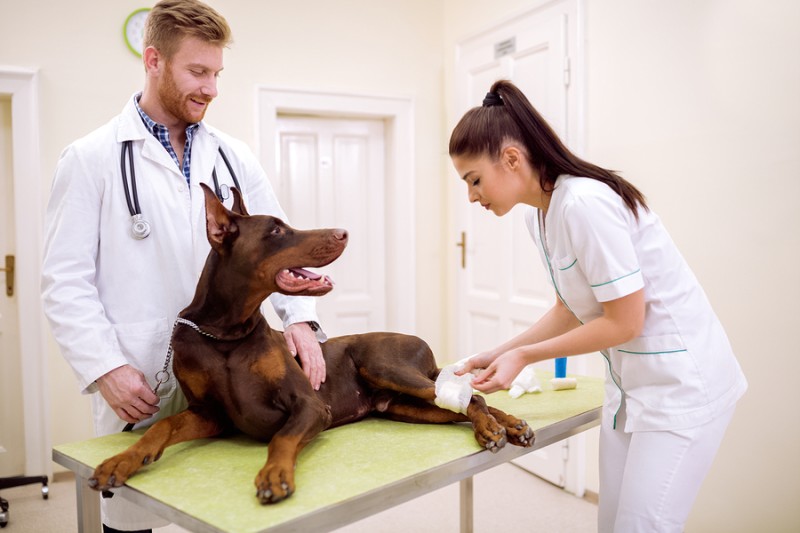
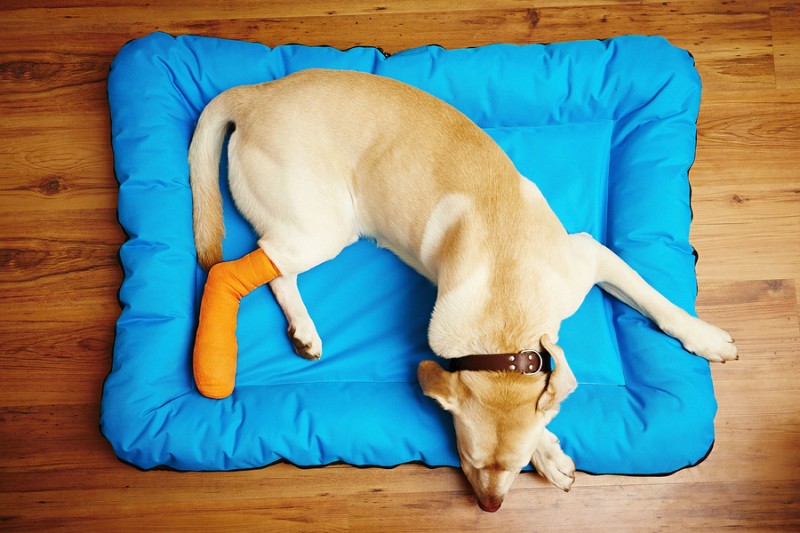
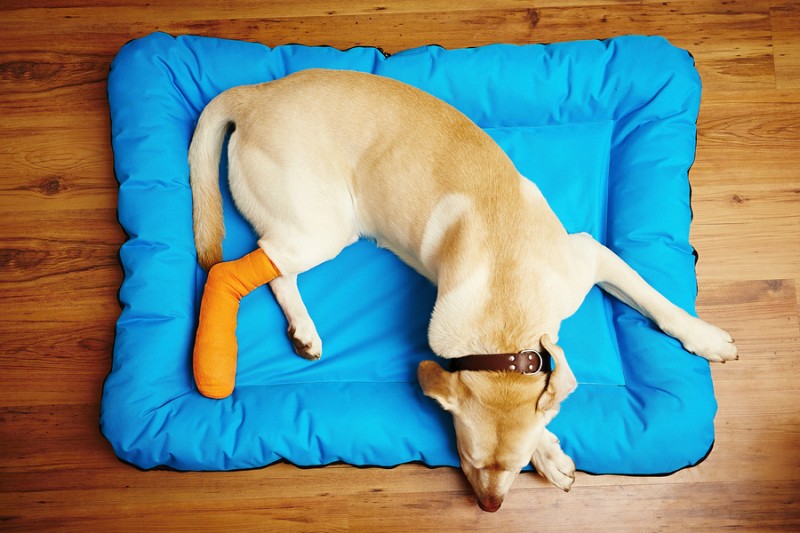
A hit or fall are the main causes of broken bones in dogs. Also the age or physical condition of the dog will affect to a greater or lesser extent the severity of the situation. Since one day we could see ourselves in this situation, we will know how we should act before a fracture in a dog.

What are bone fractures?

A fracture is a partial or total break of a bone. Depending on the severity and type of fracture, it may or may not be visible. Thus, some can break the skin and appear to the outside, while at other times the displacement of the bone remains inside the skin.

Knowing how to act on a fracture is vital, because although they have treatment, if we do not act quickly we can endanger the life of the animal. Some factors that will influence the trigger or evolution are the age of the dog, weight, lifestyle or possible pathologies that may suffer.
Cómo actuar ante una fractura de perro

The importance of knowing how to act in the face of a fracture

As we say, sometimes an accident does not have to have a greater impact than the localized damage itself. But so that gravity does not transcend, it is necessary to know how to act before a fracture in a dog.

If you have been lucky enough not to see yourself in this situation but you want to learn not to take risks, or if it has happened to you and you have not known how to react, we will know the steps we must take to help an injured animal.

Call for help as soon as possible

Whether we have knowledge of first aid or not, we should call a veterinarian as soon as possible. If we have a vehicle, it is important to move it as soon as possible. In the event that we do not have one, we can consult directly with our veterinarian.

Some veterinary clinics have an ambulance service available for the collection of injured animals. We must remember that as with non-visible fractures, there may be other traumatisms that we do not perceive. Knowing how to act in the face of a fracture or an accident is essential to save their lives.

Immobilizes the area

If it is a visible fracture and we have knowledge of first aid, we can proceed to immobilize the area. A newspaper or a magazine can be useful to us. It is enough to tie them or hold them with a bandage around the fractured limb.

However, before rushing to act on a fracture, we must ask ourselves if we really know how to do it. If we are not in possession of minimal knowledge about the splinting of a limb, it is better to wait for assistance. In addition to worsening the situation if there are joints involved, we can cause pain to the animal.

Modifies your posture if you are unconscious

Sometimes the animal can become unconscious, and acting on a fracture in these cases becomes more important. When moving it, we must raise its head and avoid compressing or bending its neck. Major risks that may occur are choking when swallowing the tongue or cervical damage.

Our veterinarian will then take care of immobilizing the area correctly or performing surgery if necessary. For its recovery, it will be necessary to use splints or other accessories that protect the area.
Check out the items we have available in our store and help them improve quickly. Taking care of him with affection and patience is as important as knowing how to act in the face of a fracture.

Myositis in dogs is one of the canine diseases that most affects their quality of life. Not only because it can affect your ability to move and perform your usual daily activity. Also because it is a very painful pathology that limits them a lot. It is an inflammation of one or more muscles that can affect different parts of the body. Its origin can be multiple, and can be due to wounds and muscle breaks as well as overexertion. But also to the effects of age.

It mainly affects short-haired pets, such as various breeds of dog. It can occur at any age, although it appears more frequently in adult and older dogs. There are three types: eosinophilic, rheumatic and purulent.

Miositis en perros: principales causas, síntomas y tratamiento

Causes and symptoms of myositis in dogs

Myositis in dogs can be due to several reasons. Among them, a muscle tear or a hematoma, both the product of a blow or a fall and excessive physical activity or a jump from a high height. But it can also appear after bearing an excessive load without the animal being prepared for it.

Sometimes it also occurs as a result of hypothermia that a dog can suffer when it is in an environment in which it is excessively cold and without being prepared for it. Then, the muscles have trouble moving, since the cold paralyzes them, and inflammation appears.

When it appears in an older dog, it is simply about the effects of age, which produce various pains and ailments. Or by parasites that nest in the muscles and other mobile areas of the animal’s organism, and cause displacements and erosions.

Obviously, one of the main symptoms that a dog has myositis, in addition to the difficulty of displacement if it affects the legs or the area of the joints and spine, is pain. Affected dogs will have so much pain that they usually won’t want to move (or won’t be able to), and they will moan in pain. They will also refuse to touch the affected area, and even caresses, even if they are soft.

The dog may feel better first thing in the morning after sleeping, but he will already appear tired. And the pain will increase as the day goes by. It is especially indicative of the presence of myositis pain in the area of the pelvis or shoulder, two of the points in which this ailment first manifests.

In addition, myositis presents other additional symptoms. Among them, the difficulties to pose one leg or several, the curved position of the dog’s back , etc. All together with an evident tension in the neck area, product of pain and difficulties in moving, and swelling of the affected area. It can also increase body temperature, and blood appears in the urine. And as a consequence of all this, come decay and loss of appetite.

Treatment of myositis in dogs

When myositis is detected early, and it is a mild form, it will be enough to take the animal to the veterinarian to put an appropriate treatment after finding the cause of the disease. It will usually be fully restored within a couple of weeks. But when it comes to severe myositis or its treatment is postponed, it may take longer to heal, and you may have sequelae.

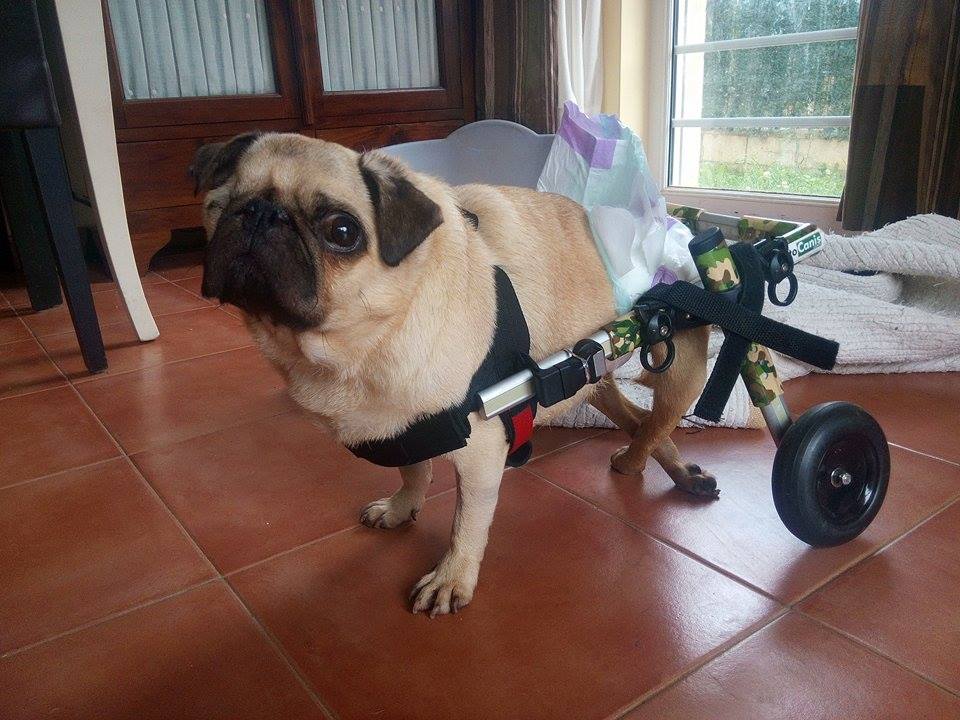
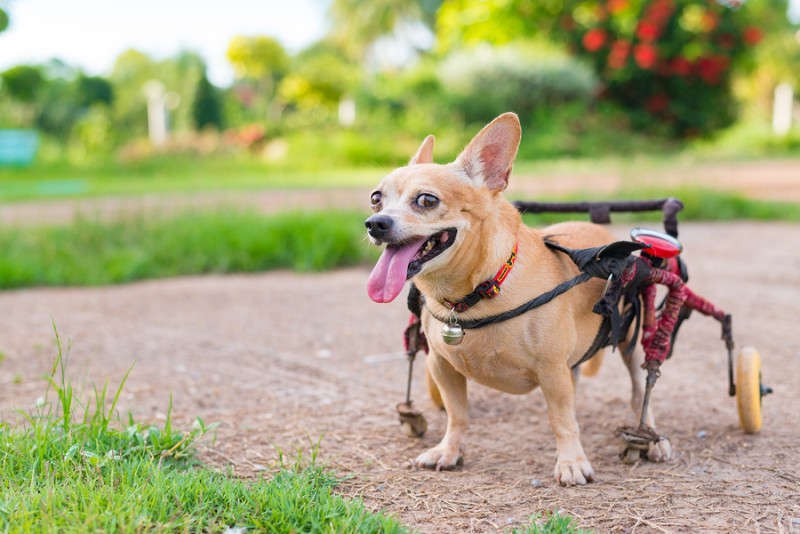
Among these sequelae are the shortening of the affected muscles, muscle atrophy and the paralysis of one or more limbs. In these cases, in addition to a treatment to eliminate the pain and try to repair as much as possible the damage, the dog may need rehabilitation and various supports to be able to move. These range from a protector for the affected limbs to a wheelchair adapted for more severe cases involving paralysis of the hind legs.

Due to the great veterinary advances, today we can find various solutions for the mobility problems of animals. Whether our friend has suffered from an illness or if we consider adopting, it is possible to take care of a disabled dog so that he enjoys a happy life.

What are the causes of loss of mobility

Although until not too long ago the option of caring for a disabled dog was not valued, today they are given a chance. Thanks to the work of those who fight for their lives, in the market we can find different options to help them improve their quality of life.

But before we move on to the solutions available to care for a disabled dog, let’s look at the causes. In some cases, mobility can recover progressively, but in others, paralysis will be definitive.

  • Diseases or degenerative processes: some pathologies such as canine osteoarthritis of severe type, dysplasia, hernias or degenerative myelopathy, among others, affect the physical abilities of dogs.

  • Interventions: a surgical intervention, a fracture or some accidents temporarily reduce the mobility of the animal. It will be temporary or permanent depending on the severity and damage.

  • Paralysis: being born with a defect or suffering an amputation causes permanent paralysis in the animal.

  • Neurological problems: these types of problems, as well as those of the spine and traumas, usually appear with age or overweight. The solution varies depending on the cause.

Thus, we can distinguish between permanent and temporary paralysis. Depending on the causes, treatment and options for caring for a disabled dog will change. There are different chairs and harnesses on the market to help them. And it is also convenient to use physiotherapy to speed up rehabilitation when possible.

Cómo cuidar de un perro discapacitado

Elements to care for a disabled dog

Caring for a disabled dog is now quite simple given the options we have at our fingertips. Although there are different models of wheelchairs and harnesses on the market, there are those who prefer to build them themselves.

Wheelchairs

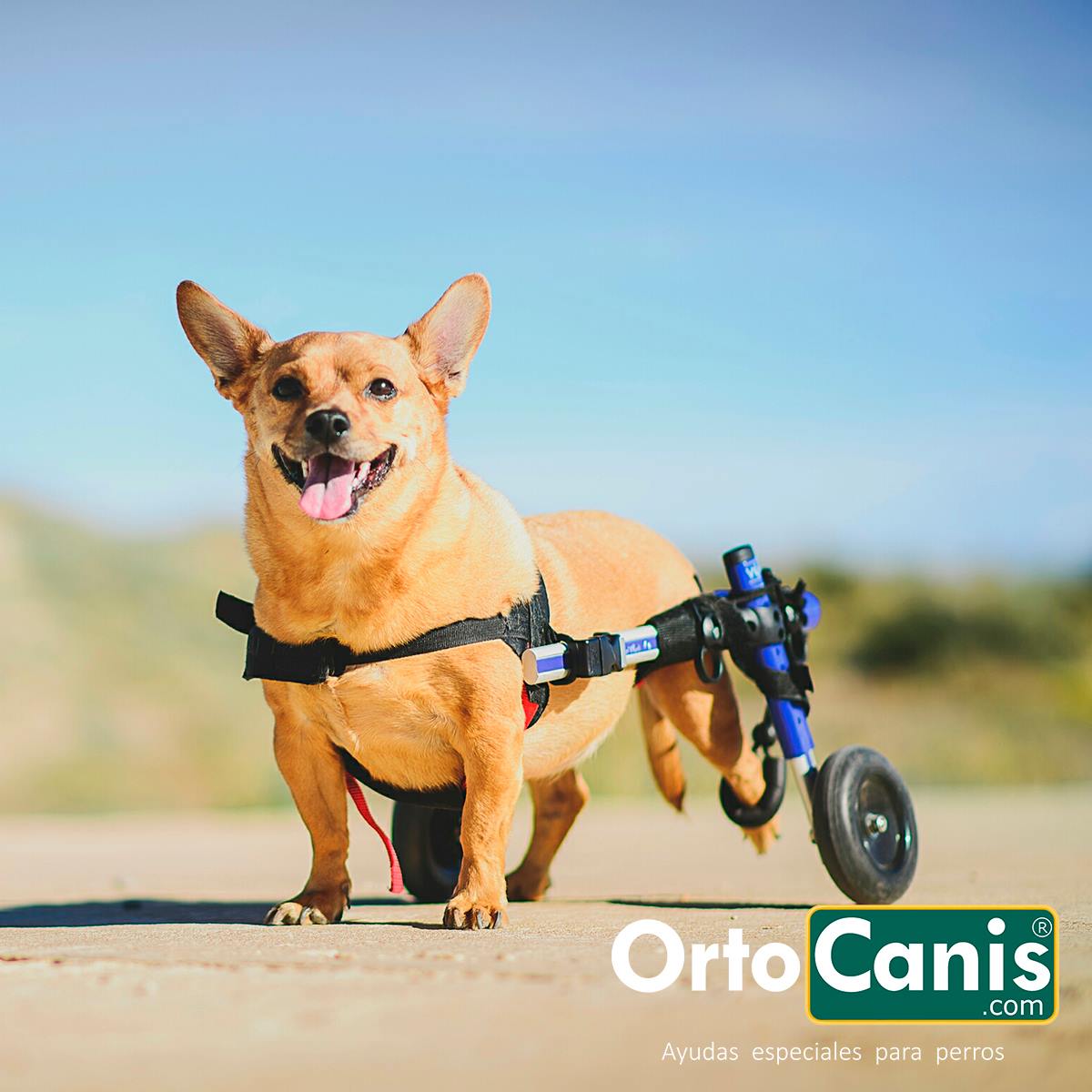
Wheelchairs for caring for a disabled dog are usually made in industrial processes. However, there are also handmade models. At present, we find models made in 3D, which are adapted to the measurements of our friend.

Likewise, the chairs are also adapted for the lack of mobility in the front legs (uncommon) and the posterior legs. And there are wheels for rehabilitation and integral, if mobility is reduced.

Harness

Harnesses are also used to care for a disabled dog. They are indicated for the loss of mobility, for the paralyzed or when there is a disability. Thanks to their design they allow us to support the weight of the hind legs, front legs or both.

For greater comfort when caring for a disabled dog, there are also variants with restraint on the vine. The range of types of harnesses is very wide and we will have to look for the one that best suits.

In Ortocanis you can find different models that adapt to the different pathologies of the dog. If you have questions, you can contact us and we will help you choose the right one. You can also read the experience of other buyers. Caring for a disabled dog is giving life a chance.

Dogs’ paws are one of the most vulnerable areas of dogs. On the one hand, they are in direct contact with the ground and can suffer injuries. They are also exposed to blows or bad footsteps. And of course, they can suffer a problem in the legs, or injuries from sprains, bad footsteps, etc. Or simply, due to the effect of age.

Therefore, it is advisable to check your limbs carefully from time to time. You also have to be aware of any change in behavior. If, for example, a dog that is very active suddenly becomes sedentary, or if it changes other behaviors, it is necessary to find out why. To do this, apart from ruling out other pathologies, it is necessary to check their legs.

Cómo detectar una enfermedad o problema en las patas del perro

How to detect a problem in the paws of a dog

Sometimes, if a dog has a paw problem it is quite obvious. Suddenly they start limping, or they don’t want to walk. Or he gives them to lick their paw insistently. Or for giving the feeling that they bite it. So, it’s clear that something is happening to them.

But sometimes, what happens to them is not so obvious. They may be upset, but it is not clear where the problem may be. In that case, when the dog is comfortable, a careful inspection of its paws can be carried out. In these cases, you have to be careful when doing so, so as not to harm it.

How to examine a dog’s paws

To check a dog’s paws for problems or injuries, it is best to start with their pads. Because they are in contact with the ground, they are some of the parts most susceptible to problems. When walking, you can stick something to the dog in them. Or make a small wound, which at first glance is not appreciated, but that can later lead to a more serious problem in the legs. You may also have cracked pads, or a cyst.

After checking the pads and the area around them, if there is no problem in them, you have to check the legs. To do this, it is necessary to carefully feel each of them. In this way you will be able to appreciate strange lumps. Also blows that can cause pain. If so, the animal will react when it feels it, and will try to remove the paw. Hence the review with care. To avoid causing you more pain.

What to do when there is a problem in the legs

Whenever it is detected that a dog has a problem in the legs, it is necessary to go to the veterinarian. Even if it is a wound, because if it does not heal well or becomes infected, it can degenerate into a larger problem. Therefore, it is advisable to consult with a specialist. And do it, in addition, without wasting time. If you wait to go with the dog to a consultation, the problem can be aggravated.

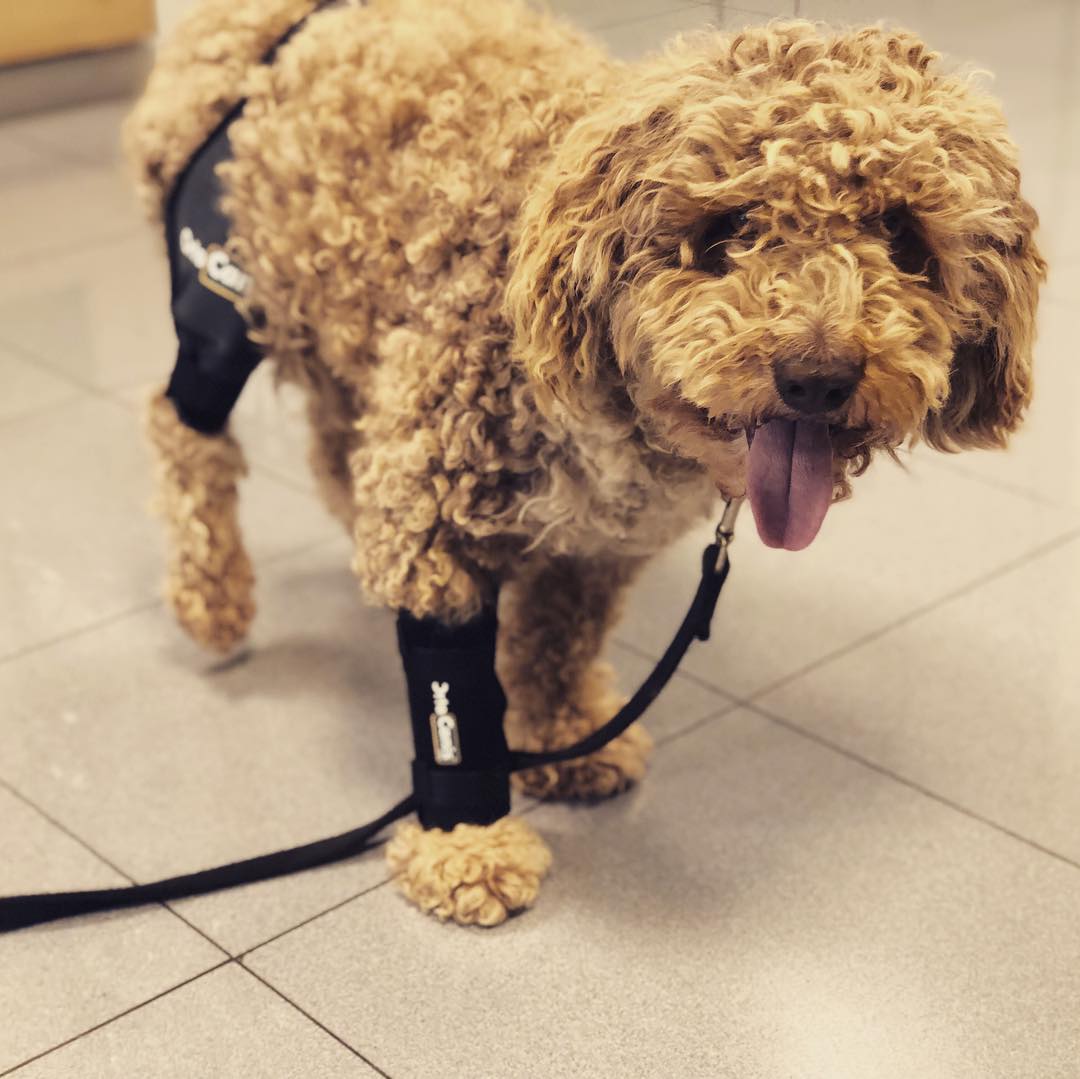
The veterinarian shall examine the animal and decide on the most appropriate treatment in each case. From a wound cure to a small surgery. You can also indicate if it is necessary to protect any areas of the affected legs. For example, with a carpal stand. Or, after surgery, with an orthopedic splint. In any case, you should always follow the guidelines indicated by the specialist.


Physiotherapy for animals: accelerates their rehabilitation

Animal physiotherapy is a group of therapies and techniques that help us accelerate the rehabilitation of our friends. Recommended for a wide variety of injuries and pathologies, it is becoming a great ally for recovery.

What is physiotherapy for animals

As for humans, physiotherapy for animals is a technique that serves both for the prevention of injuries and for the rehabilitation of them. In addition, due to the wide variety of options, it is able to treat different musculoskeletal pathologies.

It has been shown that physiotherapy in animals is able to cure various conditions. With the reduction of pain, inflammation and swelling, the body is more prepared to rebuild muscle strength and thus regain lost mobility. The recovery process is reduced when these therapies are used.

Physiotherapy for animals is aimed at three different categories. On the one hand, small animals, such as dogs and cats. Secondly, large animals, such as horses. Finally, exotic animals, such as those who participate in circuses or who live locked up in zoos, in which their physical condition is seriously damaged.

Benefits of physiotherapy for animals

Physiotherapy for animals should be carried out when indicated by a veterinarian. It is a complementary therapy that needs to be supervised. Some of the benefits obtained with this treatment are the following:

  • Improved quality of life when mobility has been lost due to some type of injury or degenerative disease

  • Slowing down of the processes that damage and degenerate the musculature and bone structure of the animal. Also helps treat muscle spasms

  • Increased performance and improved treatment for musculoskeletal injuries

  • Improved energy and vitality

  • Reduction of pain in muscles, tendons, ligaments and joints that have suffered ruptures and optimization of fracture repair

physiotherapy for animals

How are the physiotherapy sessions in animals

Physiotherapy in animals covers different treatments. The duration of these sessions is between an hour and an hour and a half depending on the technique used. These can be passive or active depending on the objective we have.

One of the techniques used is massage. In addition to reducing muscle tension and pain, endorphins are released and stress is reduced. Physiotherapy in animals not only improves physical condition, but also helps the emotional picture.

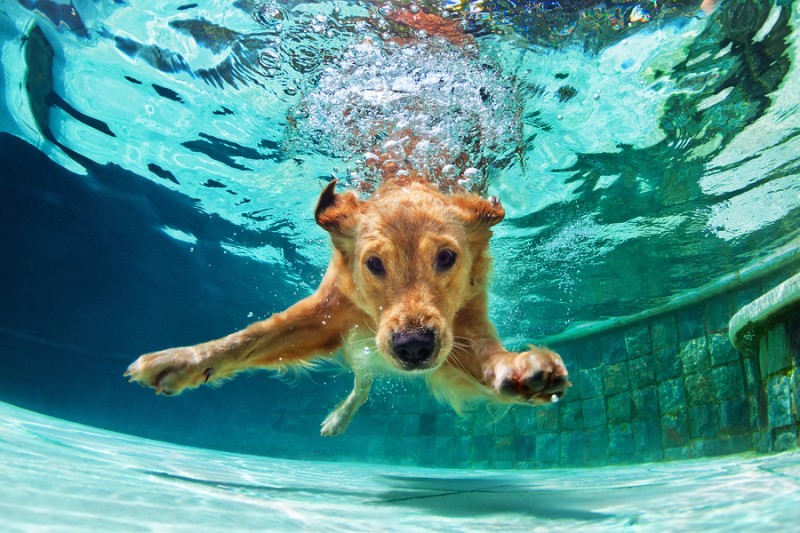
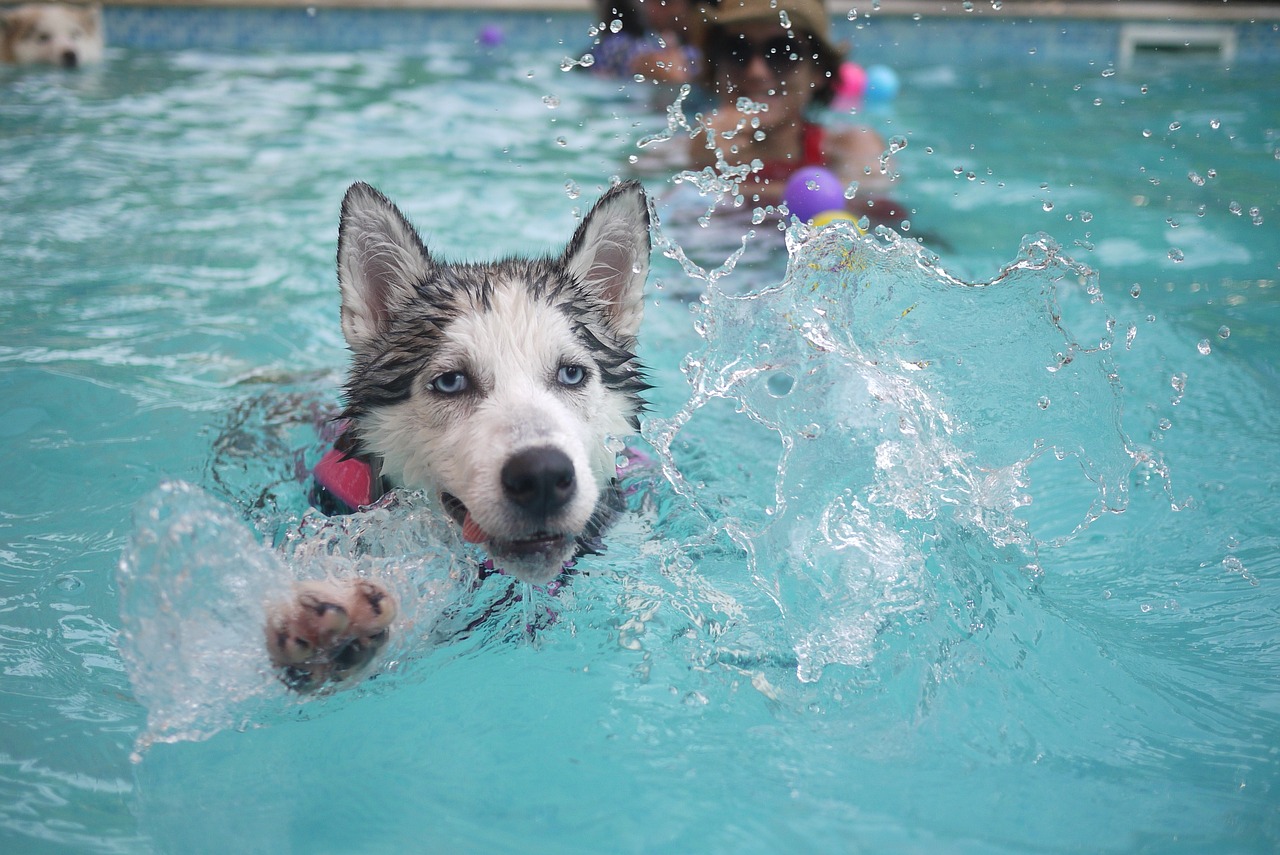
Hydrotherapy is also very common for those animals with joint problems. Since in water we do not carry the weight of the body, this type of physiotherapy for animals is indicated for those whose muscles or bone structure is weakened. The rehabilitator will be in charge of assessing the modality of the swim, the intensity and the time.

Laser therapy or ultrasound are also very often used for the treatment of pathologies. The intensity and depth at which you work will always depend on the degree of the disease and should always be supervised by a rehabilitator.

Physiotherapy for animals as part of rehabilitation can greatly improve our friend’s recovery process. In our store, you can find massagers and hot and cold therapies that will help you achieve these goals.

Elbow bursitis is a more frequent ailment than we think in dogs. Especially in those that have medium or large size and short fur. It is nothing more than an inflammation of the bursa in which the synovial fluid of certain joints is located. Specifically, those that have a gap between the bones they join. It is in it that this bag is located, which wraps around the joints. Almost all joints in the body of humans and animals are of this type, such as the knee or elbow. And it is in the latter that elbow bursitis is most often given in dogs.

Cómo detectar y tratar la bursitis de codo en los perros

Elbow bursitis in dogs: diagnosis and treatment

The appearance of bursitis in the elbow of a dog’s paw spontaneously is quite rare. It will usually appear after a strong blow to the area. Or after a light blow but that the animal is given continuously. When it occurs, it is quite evident that something happens to the animal. The joint begins to become inflamed and the animal has trouble walking and moving it. In addition, he begins to have pains.

Logically, the earlier it is detected, the less gravity it will reach. To do this, it is advisable to explore the dog’s paws with some frequency and, before any strange lump in its joints, go to a veterinarian. He will examine the animal and prescribe the most appropriate treatment.

This treatment will be different depending on several variables. Among them, the state of bursitis, as well as the presence or not of certain complications. For example, from an associated infection. Usually, it will be enough to put a bandage on the affected limb. You may also advise the use of an elbow orthosis to reduce it.

In cases where there is infection, it will also be treated with antibiotics. If it is advanced, it may need to be drained, using a fine needle. And if it is a severe bursitis, it will be necessary to perform a surgical intervention to reduce it.

How to avoid the appearance of bursitis?

To prevent as much as possible the appearance of bursitis, repetitive blows should be avoided. Against the abrupt and strong little can be done, but at least the others can be tried. For example, those that can occur when lying on the ground. To avoid them, a soft surface can be placed where the dog usually lies down.

Obviously, if it is done suddenly, the dog will reject it. Especially if you are an adult and not used to it. Therefore, the sooner you start getting used to sleeping on a cushion of those used as dog beds, the better. If possible, it should be started when the dog is still a puppy. This will make it easier. If you do not accept it, you can try it by placing a soft carpet where you are used to lying down.

It is also advisable to avoid, as far as possible, that the dog lies on the asphalt. Also on the ground if there is no grass or grass on it, since being hard and presenting an irregular surface, it can damage the elbows and lead to bursitis.

Our friend’s health care doesn’t start when he starts to deteriorate. Throughout his life we must take measures so that in his last stage he can enjoy good health. To do this, we leave you some tips to strengthen the joints of a dog.

Cómo fortalecer las articulaciones de un perro

What are the joints of a dog

Joints are a structure that functions as the union of two bones. These are composed of various parts: the capsule, cartilage, synovial membrane, tendons and ligaments, mainly. Each type of joint varies from the others.

All of them are what allow us mobility, therefore, when they begin to deteriorate, movement is reduced and pain is experienced. Their wear prevents them from absorbing the impact when moving. For this reason, it is convenient to strengthen the joints of a dog since it is healthy. This will prevent them from degenerating precipitously and causing discomfort.

Below we are going to know some tips that will help us strengthen the joints. Following them throughout their lives, we will be able to improve the quality of it. As the saying goes, prevention is always better than cure.

Tips for strengthening a dog’s joints

With these simple but effective tips we will be able to strengthen the joints of our dog and improve their overall health. Start putting them into practice now and don’t wait until it’s too late.

Control weight

The main reason why the joints suffer is excess weight. This overload weakens them and increases the pain felt when they wear out. Therefore, to strengthen the joints of a dog, we must control its feeding.

As with humans, the metabolism slows down with age, so as this progresses, we must reduce the caloric intake. If we are used to also giving it our food, we must bear in mind that although it is a whim, it also increases the total calories it ingests.

Improves your diet

Although feed preparations contain all the necessary nutrients, sometimes it is convenient to take supplements that help us strengthen the joints. Especially when it comes to dogs of advanced age or susceptible to suffer this type of pathologies.

L-carnitine and omega 3 and omega 6 fatty acids are very important for strengthening joints from within. Protein-rich foods, such as meat or fish, help nourish the collagen found inside them.

As far as oils are concerned, coconut, flaxseed or Krill are very good for strengthening joints. Check with your veterinarian or at your pet store if you have questions about which foods to choose.

Exercise frequently

The fact that dogs are domesticated and accustomed to living in houses, does not mean that they can have a sedentary life like many people. Animals need to walk several times a day and perform activities such as running and playing. Not only will they feel happy, but it will also help strengthen the joints.

If we keep our dog in shape from a young age, his muscles will be stronger and will be able to better support the joints. When your age is older, your activity level will be milder, but you will also enjoy running. Remember that strengthening the joints will save us many future problems.

With these simple tips we can make an important difference in the health of an animal. Strengthening our dog’s joints is practically an obligation as owners. In addition, the hours of play will improve the bond between the two.

One of the most delicate points for the health of a dog is its paws. The presence of injuries in them will not only make it difficult for them to move. They can also affect your health in the long run. Therefore, it is necessary to take care of the canine limbs to avoid and prevent, as far as possible, the main problems on the dog’s paws. It will be enough to follow some simple guidelines.

Some enemies of the dog’s paws

In addition to the occasional blows that can cause injuries to dogs on the legs, there are several enemies that undermine their health. One of them is age. Just as it happens to humans, as dogs get older their health is suffering. When a dog is already a few years old, its joints are resented. They are no longer as elastic or strong as before. Therefore, they will have to be monitored carefully.

To do this, it is advisable to feel their legs carefully from time to time, and check that they do not have points where they have pains. You also have to watch that they walk well. And when in the slightest doubt, go to the veterinarian. In this way, if the dog has an injury to its paws or hips, it can be diagnosed at an early stage and treated appropriately to improve the quality of life of the animal.

Another of the enemies of the dog’s paws is overweight. If it is already combined with age, the suffering that both factors cause in the dog’s paws can be quite large. Luckily, it can be avoided and controlled better than the effects of age. It is enough to take care that the animal exercises sufficiently and appropriate to its age and condition. And if you still have a tendency to gain more weight than you should, it is advisable to take care of your diet and change it if necessary. This will avoid damage to their legs due to an excess of kilos.

Cómo prevenir problemas en las patas del perro

How to care for dogs’ paws

In the care of the legs of dogs should not neglect any of their parts. Something that in principle may seem as unimportant as the pads on which it rests must always be as careful as possible. Thus, you have to periodically trim the hair that appears in them. It is also necessary to ensure that they remain clean to avoid injury.

Also do not forget about the nails of dogs, which also need a “manicure” from time to time. In these cases, it is best to take them to the veterinarian to see what kind of care they need or to a specialized establishment to have them cut and filed. If you dare, you can get a specific nail clipper for dogs, about which you can ask the veterinarian, and cut them yourself.

It is also necessary to try to prevent the animal from walking on very cold surfaces, such as ice, without protection. Therefore, if you take it to the snow, something that for many breeds originating from cold climates is a pleasure, you must protect their legs with special boots. Or, if your dog doesn’t tolerate them, apply protective wax to his pads. And after the exit to the snow, check their pads to prevent ice from sticking to them. The same happens with the heat, so you have to avoid walking in summer on very hot surfaces, such as the sand of the beach.

When a dog gets older, its needs change. Also the care that we must give them so that their life remains full and of quality when they become senior dogs. Therefore, from a certain age, ailments can begin. And sooner than you think. Usually, each year of a dog’s life is equivalent to seven of a human. So it doesn’t take long until a dog enters middle age. Of course, first of all, you have to know when a dog can be considered senior.

Senior dogs: at what age do they become so?

In general, a dog can be considered to be seniorified during the last quarter of its life. In addition, small and medium-sized dogs become senior later than large ones. Usually, larger breeds become senior dogs by the age of seven or eight. Sometimes, a year earlier. It all depends on its size, because the larger the breed of the animal, the sooner it will be considered senior.

Meanwhile, dogs of smaller breeds begin to be considered senior around 9 or 10 years, and their life expectancy is also longer as they are smaller breeds.

Rodillera para perro

What distinguishes a senior dog

First of all, a senior dog is in no way synonymous with a sick dog. Rather it will be a dog that has entered maturity. Therefore, it has many advantages. It is an animal with some experience. In general, it is already taught and is calmer than puppies and young dogs.

Of course, this does not mean that it has become an animal that does not perform activities. It only implies that he will not be as fond of adventures as before, and that he begins to like to follow certain routines.

What care to give to senior dogs

With the maturity of a dog, the first ailments begin to appear. It also becomes necessary to start monitoring your health more carefully. Thus, it will be convenient to take you from time to time to the veterinarian for a check-up. It is the best way to control the problems that may appear in your teeth, in your fur, your vision, etc. Also to detect diseases associated with the wear and tear caused by age.

On the other hand, you have to take care of your diet to avoid overweight, which increases in senior dogs due to the reduction in physical activity associated with age. Senior dogs that are overweight may suffer from various joint ailments more often. In these cases, the dog’s knees can suffer the consequences. This, added to the fact that with maturity the joints of animals can become inflamed and osteoarthritis appears, can cause walking problems and pain.

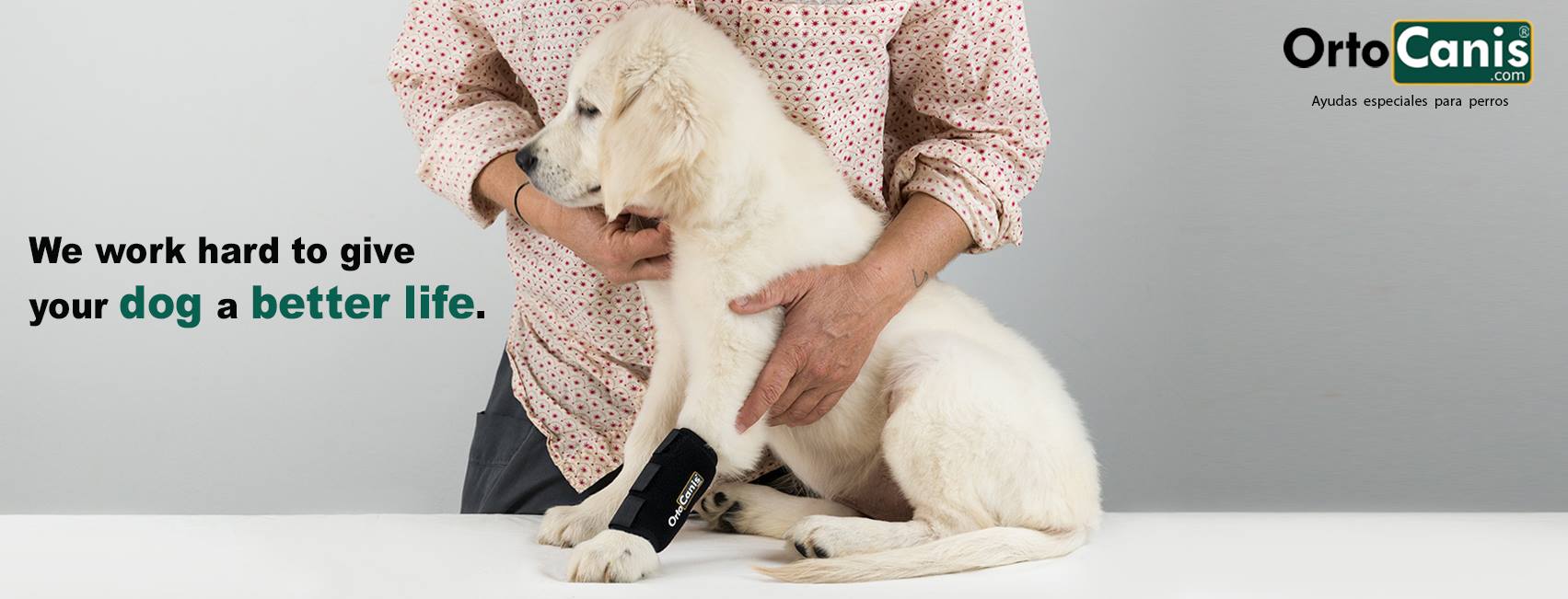
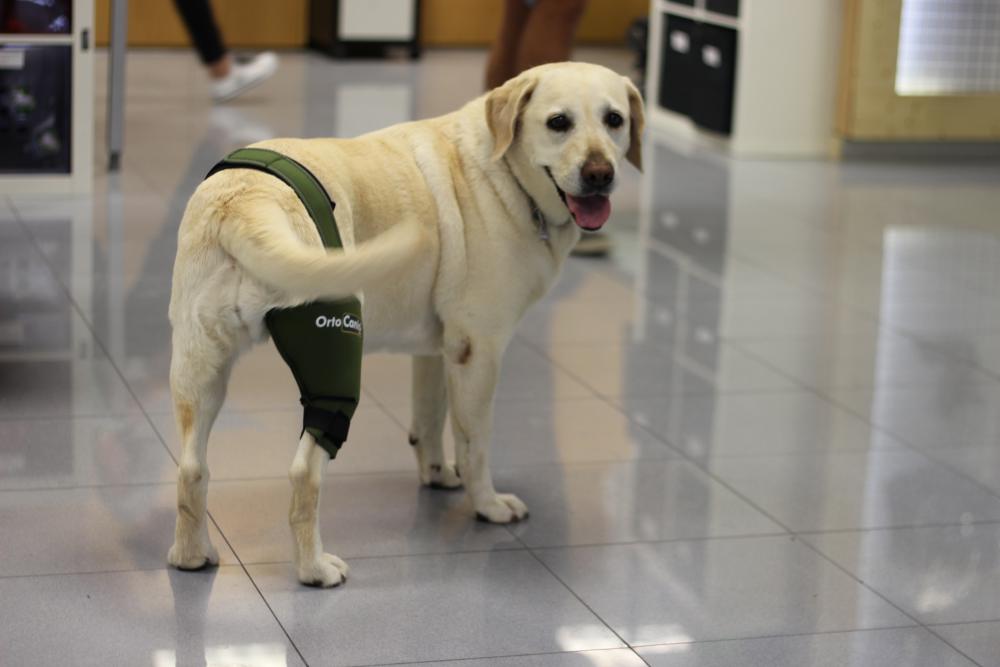
Despite all the weight and medical checks, there are times when osteoarthritis cannot be prevented from appearing. In this case, in addition to following the treatments recommended by the veterinarian, you can help him feel better with a knee protector for his affected limbs. Or if osteoarthritis affects their hips, with a special harness for them. With it you will have more stability when it comes to moving.

Although they are much less visible than ours, dogs also have knees. And like us, they also experience pain and suffer injuries to them frequently. In case you’re not familiar, let’s talk about the most common knee problems.

Problemas de rodillas más comunes

The most common knee problems

The causes for knee problems can be several. For example, an injury or a condition of these. The difficulty in identifying them is that when walking on all fours, suffering from lameness in one of them does not prevent you from continuing to advance.

It is for this reason that we must regularly pay attention to our dog. Detecting pathologies quickly will help us to treat them and prevent the damage from going further, producing irreparable injuries.

The knee problems that most commonly appear in dogs are ruptures of the cruciate ligaments and dislocation in the patella. In small breeds the latter usually occurs, while ligament injuries appear more in large ones, especially if they are overweight.

Other knee problems that may also appear are injuries to the meniscus or tears in the ligament. These can be found in dogs of any size, since they are often due to blows or sudden movements. The knee joint is quite unstable compared to other parts of the body.

Symptoms of knee problems

Each dog may show a different symptomatology, but broadly speaking, the most common are those detailed below:

  • Advances with the leg raised and is not able to support it and carry weight

  • Limp with the leg that is affected

  • Sudden onset of pain while playing or exercising

  • Swelling in the knee

If we observe that our dog seems to have knee problems, it is advisable to go to the veterinarian to make a complete diagnosis.

How to Treat Knee Problems

Depending on the knee problems suffered, the treatment will vary. If the lesion consists of a displacement of the kneecap, it can be placed in place by pushing it. However, it is the veterinarian who must do it. If it is a severe dislocation, surgery may be needed.

Knee problems from tears or tears in the ligaments usually involve surgery in most cases. Depending on the severity and age of the dog, rest may suffice. Since these are painful injuries, analgesics will have to be given to calm the pain and inflammation.

If there has been immobility or surgery, rehabilitation will also be necessary for the progressive recovery of muscle strength and mobility. We may also need some special bandage.

In Ortocanis we have a wide range of products aimed at the welfare of animals and their recovery from injuries or pathologies.